Uttaradhyayana Sutra · Chapter 30

Path of Austerity (तपोमार्ग गति)

Chapter 30 — A Comprehensive Exposition on External and Internal Austerities

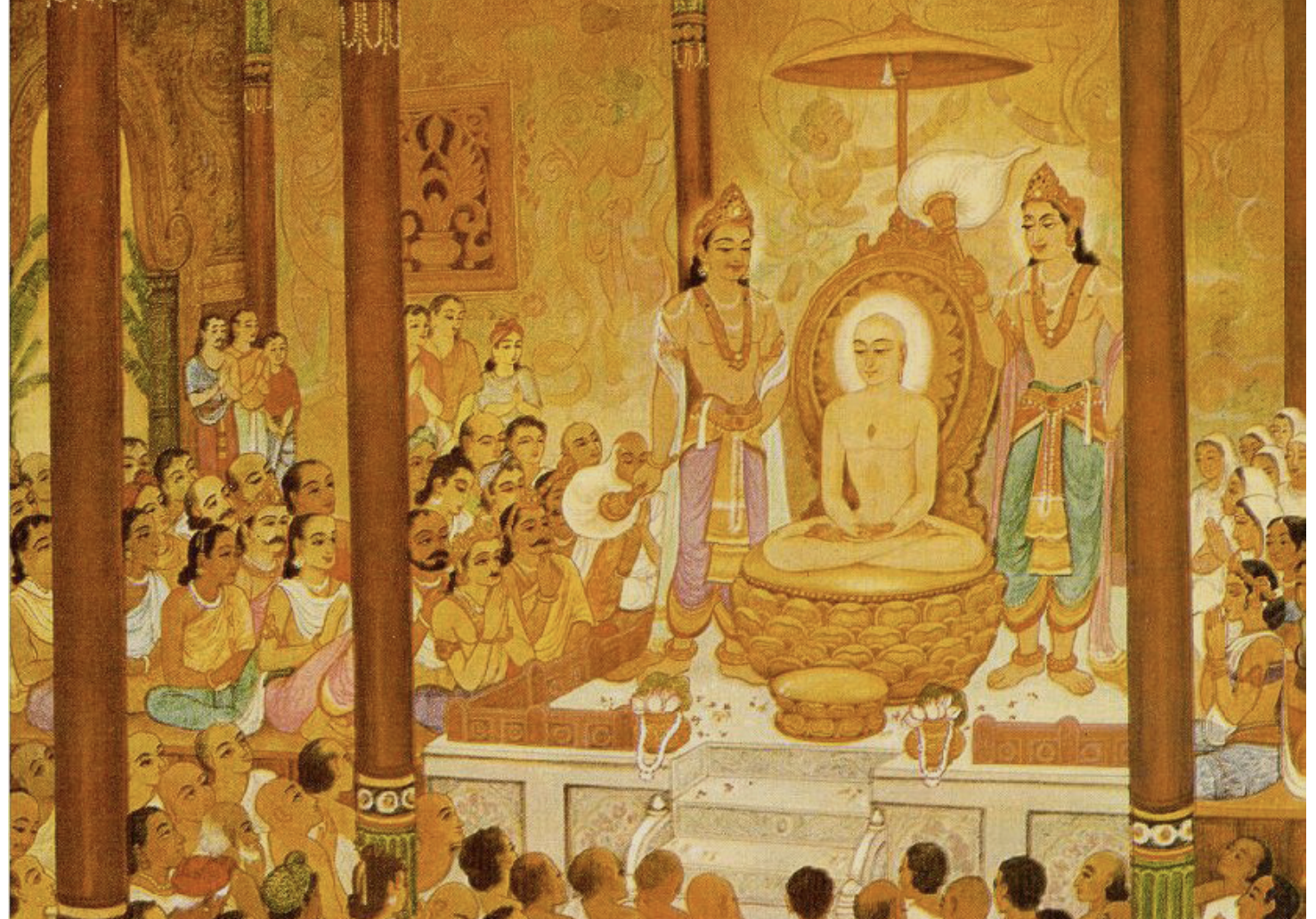
Lord Mahavira teaching about Tapas

एगओ विरइं कुज्जा, एगओ य पवत्तणं

“One should practice renunciation on one hand and engagement on the other — turning away from non-restraint and engaging in restraint.”

About This Chapter

The Path of Austerity

Tapomārga Gati — the thirtieth chapter — is a rigorous map of the soul's purification through tapas (austerity). It moves from the foundational principle of turning away from harmful conduct to the precise technical details of twelve distinct forms of spiritual discipline.

The chapter is divided into two major halves: the six external austerities (bāhya tapa) which discipline the body, and the six internal austerities (abhyantara tapa) which transform the mind and soul. It culminates in the promise that those who practice both rightly are quickly liberated from the cycle of existence.

Chapter Structure

I The Dual Path: Renunciation and Engagement
II Endurance and Mastery: Conquering the Inner Enemies
III The Mechanism: How Austerity Sheds Karma
IV External Austerities: Disciplining the Body
V Internal Austerities: Purifying the Mind
VI The Final Release: Freedom from the Cycle
37 Sutras
Seekers Addressed To
6 Sections
Adhyayana 30

The 37 Sutras

Each sutra is presented with the original Prakrit, English translation, and a simplified commentary.

Part I — The Dual Path: Renunciation and Engagement
30.1

एगओ विरइं कुज्जा, एगओ य पवत्तणं । असंजमे णियत्तै चे, संजमे य पवत्तणं ॥३०.१॥

One should practice renunciation on one hand and engagement on the other — turning away from non-restraint and engaging in restraint.

Jain Principle Dual Path · Virati and Pravartana

The spiritual path requires two simultaneous efforts: virati (turning away from sinful conduct) and pravartana (actively engaging in righteous conduct) — passive avoidance alone is not sufficient.

This opening sutra establishes the fundamental dual principle of the spiritual path: simultaneously withdrawing from what is harmful and advancing toward what is beneficial. The practitioner must do two things at once — virati (renunciation of sinful conduct) and pravartana (active engagement in righteous conduct). This is not merely passive avoidance but a dynamic, two-directional effort. One turns away from asaṃyama (non-restraint) while simultaneously turning toward saṃyama (restraint). Am I only trying to stop bad habits, or am I also actively cultivating good ones? True growth requires both.

The simple version: The spiritual path requires two simultaneous efforts — stopping harmful behavior while actively doing what is right.

Renunciation Restraint Engagement
30.2

रागदोसे य दो पावे, पावकम्म-पवत्तणे । जे भिक्खू रुभइ णिच्चं, से ण अच्छइ मंडले ॥३०.२॥

Attachment and aversion are the two sinful causes that lead to sinful karma; the monk who constantly delights in them does not remain in the circle of the righteous.

Caution Rāga and Dveṣa · Root Causes of Sinful Karma

Attachment (rāga) and aversion (dveṣa) are the two fundamental passions that drive all sinful karma accumulation — a practitioner who indulges in them continuously falls out of the sacred circle of the righteous.

Having established the twofold principle, this sutra identifies the root causes that prevent spiritual progress: rāga (attachment) and dveṣa (aversion). These are the two fundamental passions (pāva — sinful forces) that drive the accumulation of sinful karma. A monk who constantly delights in (rubhai) these two passions cannot remain in the maṃḍala (the sacred circle of the righteous community). Which of the two poisons — attachment or aversion — has a stronger grip on my daily actions?

The simple version: Attachment and hatred are the two root causes of bad karma — a person who keeps indulging in them falls away from the path of righteousness.

Attachment Aversion Karma
30.3

रागदोसे य दो पावे, पावकम्म-पवत्तणे । जे भिक्खू वज्जइ णिच्चं, से ण अच्छइ मंडले ॥३०.३॥

Attachment and aversion are the two sinful causes of sinful karma; the monk who constantly avoids them — he does not remain in the circle of saṃsāra.

Jain PrincipleTyaga · Renunciation

Voluntarily releasing worldly attachments leads to spiritual freedom.

This sutra is a deliberate counterpart to the previous one. The previous sutra warned that indulging in rāga and dveṣa keeps one trapped; this sutra promises that avoiding them frees one from the cycle. The maṃḍala here shifts meaning — in Sutra 2, the monk falls out of the circle of the righteous; here, the monk escapes the circle of saṃsāra. If attachment and aversion are the only two chains binding me to suffering, what would my life look like if I loosened just one of them?

The simple version: A monk who constantly avoids attachment and hatred breaks free from the cycle of rebirth — he does not remain trapped in worldly existence.

Liberation Non-attachment Samsara
30.4

दंडाणं गारवाणं च, सल्लाणं च तियं तियं । जे भिक्खू चयइ णिच्चं, से ण अच्छइ मंडले ॥३०.४॥

The three daṇḍas (instruments of sin), three gāravas (attachments to pride), and three śalyas (thorns) — the monk who constantly renounces these does not remain in the circle of saṃsāra.

Caution Nine Obstacles · Three Daṇḍas, Gāravas, Śalyas

The nine specific obstacles to liberation — three instruments of sin (mind, speech, body), three pride-attachments, and three thorns (deceit, wrong belief, desire for worldly reward) — must all be completely renounced, not selectively.

This sutra identifies nine specific obstacles organize in three groups of three. The three daṇḍas are the instruments of sin (mind, speech, body). The three gāravas are attachments to pride. The three śalyas (thorns) are māyā (deceit), mithyātva (wrong belief), and nidāna (desire for worldly reward). A monk who systematically abandons all nine of these escapes the cycle of rebirth. Of the three "thorns" — deceit, wrong belief, and desire for reward — which one is most deeply embedded in me?

The simple version: There are nine specific spiritual obstacles — three harmful actions, three worldly attachments, and three inner thorns (deceit, wrong belief, and selfish desire). Letting go of all nine leads to freedom.

Obstacles Pride Deceit
Part II — Endurance and Mastery: Conquering the Inner Enemies
30.5

दिव्वे य जे उवसग्गे, तहा तेरिच्छमाणुसे । जे भिक्खू सहइ णिच्चं, से ण अच्छइ मंडले ॥३०.५॥

The afflictions that are divine, and likewise those from animals and humans — the monk who constantly endures them does not remain in the circle of saṃsāra.

CautionSanga · Attachment

Emotional bonds to people and things perpetuate suffering.

This sutra addresses the inevitability of external obstacles (upasarga). Three sources are identified: divya (divine), tairyagyona (animals), and mānuṣa (humans). The key word is sahai (endures) — the monk does not merely avoid these afflictions but bears them with equanimity. This endurance is itself a form of tapas that burns away karma. When difficulties come — nature, others, or life itself — do I see them as obstacles to my practice, or as the practice itself?

The simple version: A monk who patiently endures all kinds of hardships — whether caused by supernatural forces, animals, or other people — escapes the cycle of suffering.

Endurance Equanimity Afflictions
30.6

विगहा-कसाय-सण्णाणं, झाणाणं च दुयं तहा । जे भिक्खू वज्जइ णिच्चं, से ण अच्छइ मंडले ॥३०.६॥

The harmful types of speech, passions, perceptions, and the two harmful kinds of meditation — the monk who constantly avoids these does not remain in the circle of saṃsāra.

CautionSanga · Attachment

Emotional bonds to people and things perpetuate suffering.

This sutra catalogs the internal enemies: vigahā (disputatious speech), kasāya (passions: anger, pride, deceit, greed), saṇṇā (harmful perceptions), and the two harmful dhyānas (ārta-dhyāna and raudra-dhyāna). Avoiding all of these is essential for liberation. When I sit in quiet reflection, does my mind gravitate toward peaceful contemplation or toward worried, angry, or scheming thoughts?

The simple version: A monk must avoid harmful speech, the four destructive passions (anger, pride, deceit, greed), worldly perceptions, and two types of harmful meditation — these are the inner enemies that keep one trapped.

Passions Meditation Speech
30.7

वएसु-इंदियत्थेसु, समिईसु किरियासु य । जे भिक्खू जयइ णिच्चं, से ण अच्छइ मंडले ॥३०.७॥

In the five mahāvratas, the control of the five senses, the five samitis, and the three guptis — the monk who is constantly victorious does not remain in the circle of saṃsāra.

CautionMana · Pride

Arrogance blocks the humility needed for genuine learning.

The four domains of spiritual victory are: the five mahāvratas (vows), the five indriya-arthas (mastery over sense objects), the five samitis (careful conduct), and the three guptis (restraints). The word jayai (conquers) is significant — these are not merely followed but conquered, suggesting active spiritual warfare against one's own tendencies. In which area of spiritual discipline am I strongest, and in which am I most careless?

The simple version: A monk who masters the five great vows, controls the five senses, practices careful conduct in all activities, and restrains mind, speech, and body — such a person conquers the cycle of rebirth.

Vows Self-Control Mastery
30.8

लेसासु छसु काएसु, छक्के आहार-कारणे । जे भिक्खू जयइ णिच्चं, से ण अच्छइ मंडले ॥३०.८॥

In the six leśyās, the six types of bodies, and the six reasons for food-gathering — the monk who is constantly victorious does not remain in the circle of saṃsāra.

Jain PrincipleDhyana · Meditation

Inward focus purifies the mind and awakens inner wisdom.

CautionLobha · Greed

Craving for possessions generates binding karma without ceasing.

The six leśyās (soul-colorations) reflect one's karmic state; a monk must progressively purify these. The six kāyas represent all living beings — understanding this deepens ahiṃsā. The six reasons for āhāra (food-gathering) ensure that even eating is governed by spiritual discipline. Do I pay attention to the "coloration" of my inner state — the quality of my thoughts and intentions — or only to my outward actions?

The simple version: A monk must also understand and master the six soul-colorations, show care for all six types of living beings, and follow strict rules even about when and how to accept food.

Lesya Ahimsa Discipline
30.9

पिंडोग्गह-पडिमासु, भिक्खू धम्मम्मि दसविहे । जे भिक्खू जयइ णिच्चं, से ण अच्छइ मंडले ॥३०.९॥

In the rules of alms-collection, the progressive stages of spiritual practice, and the tenfold dharma — the monk who is constantly victorious does not remain in the circle of saṃsāra.

This sutra adds: Piṇḍograha (alms-collection rules), pratimās (progressive stages of achievement), and the tenfold dharma (daśa-dharma: forgiveness, humility, straightforwardness, purity, truthfulness, self-restraint, austerity, renunciation, non-possessiveness, and celibacy). Of the ten supreme virtues, which one do I most need to cultivate right now?

The simple version: A monk must also master the rules of collecting food, progress through the stages of spiritual practice, and embody the ten supreme virtues — including forgiveness, humility, honesty, and self-restraint.

Dharma Virtue Alms
30.10

मएसु बंभगुत्तीसु, संजमम्मि जयइ य । जे भिक्खू जयइ णिच्चं, से ण अच्छइ मंडले ॥३०.१०॥

In the eight primary qualities of conduct, the nine types of brahmacarya fences, and in overall restraint — the monk who is constantly victorious does not remain in the circle of saṃsāra.

The mūla-guṇas (fundamental qualities) and the nine brahmacarya-guptis (fences of celibacy) are essential safeguards. Together with saṃyama (overarching restraint), these complete the framework of discipline. Is there a dimension of my spiritual practice that I have been neglecting, thinking it less important than others?

The simple version: The monk must also master the eight fundamental qualities of conduct, maintain the nine protective practices that guard celibacy, and achieve overall self-restraint — leaving no area of spiritual discipline unattended.

Conduct Celibacy Restraint
30.11

उवासग पडिमासु, भिक्खूणं पडिमासु य । जे भिक्खू जयइ णिच्चं, से ण अच्छइ मंडले ॥३०.११॥

In the pratimās (stages) for householders and the pratimās for monks — the monk who is constantly victorious does not remain in the circle of saṃsāra.

The pratimās (stages) exist for both laypeople (śrāvaka-pratimās) and monks (bhikkhu-pratimās). A knowledgeable monk understands both sets of pratimās — the path the householder travels toward renunciation and the path the monk travels toward liberation. Do I understand the full map of spiritual progress — not just where I am now, but what comes before and after my current stage?

The simple version: A monk should understand and master both the stages of spiritual progress for householders and the advanced stages for monks — knowing the entire path from beginning to end.

Stages Path Laypractice
30.12

किरियासु भूयगामेसु, परमाहम्मिएसु य । जे भिक्खू जयइ णिच्चं, से ण अच्छइ मंडले ॥३०.१२॥

In the various kriyas (activities), regarding all living beings in the bhūtagrāma, and in relation to the paramādhārmika (supreme dharma) practices — the monk who is constantly victorious does not remain in the circle of saṃsāra.

Mastery involves understanding action (kriyā), respecting all life (bhūtagrāma), and practicing supreme righteous observances (paramādhārmika). How well do I understand the impact of my actions — not just the obvious ones, but the subtle effects on all living beings around me?

The simple version: A monk must understand all types of action and their karmic effects, respect all categories of living beings, and practice the highest forms of righteousness to escape the cycle of rebirth.

Action Life Righteousness
Part III — The Mechanism: How Austerity Sheds Karma
30.13

गाहा-सोलसयं भंते ! जीवे किं जणयइ ? गाहासोलसयं णिच्चं, पडिमं करेइ जो । तस्स इच्छिमसंपन्ने, पढमट्ठाणे तवं विहरइ ॥३०.१३॥

What does the set of sixteen gāthās (verses) produce in a soul? One who constantly practices according to these sixteen verses — for that accomplished one, this constitutes the first station of austerity.

This transitional sutra summarizes the preceding groundwork as the foundational "first station" of austerity. One who has internalized and practiced everything described in Sutras 1-12 has established the necessary foundation. Have I built a solid foundation of basic discipline before attempting advanced spiritual practices, or have I tried to skip ahead?

The simple version: Everything taught in the previous twelve sutras — renunciation, avoiding passions, enduring hardships, and mastering spiritual discipline — forms the first foundation of austerity.

Foundation Gatha Station
30.14

पडिक्कमणेणं अणुपालणेणं तओ पच्चक्खाणकरणेणं । णिव्वुडिवज्जणेणं तवोचरिया विहरइ ॥३०.१४॥

Through pratikramaṇa (confession and repentance), through anupālanā (careful maintenance of vows), through pratyākhyāna (renunciation/pledge), and through avoiding transgressions — thus one abides in the practice of austerity.

Jain PrincipleTyaga · Renunciation

Voluntarily releasing worldly attachments leads to spiritual freedom.

This sutra outlines the four-step maintenance system: confession (correction), vigilant guarding (protection), fresh commitment (dedication), and proactive avoidance (prevention). Together these four practices form a complete cycle. Do I have a regular practice of self-examination and course-correction, or do I let small lapses accumulate into larger ones?

The simple version: Austerity is maintained through four practices — confessing and repenting mistakes, carefully guarding your vows, making fresh commitments to renunciation, and proactively avoiding transgressions.

Confession Maintenance Vigilance
30.15

पच्चक्खाणेणं अणुपालणेणं विसोहीकरणेणं । अणुठ्ठणेणं इच्छाए तवो भवइ णिज्जरा ॥३०.१५॥

Through pratyākhyāna (renunciation), through careful maintenance, through purification, and through dedicated practice — with right intention, austerity produces nirjarā (shedding of karma).

Jain PrincipleTyaga · Renunciation

Voluntarily releasing worldly attachments leads to spiritual freedom.

This sutra reveals the ultimate purpose: nirjarā — the shedding of karma. Mechanical performance without proper inner motivation (icchā) is spiritually barren. When renunciation, maintenance, purification, and dedicated effort combine with genuine intention, tapas becomes the instrument of liberation. Am I practicing austerity mechanically, or with genuine intention?

The simple version: When austerity is practiced with renunciation, careful maintenance, purification of faults, and dedicated effort — all done with sincere intention — it produces the actual shedding of karma from the soul.

Nirjara Intention Karma Shedding
30.16

थवथुइमंगलेणं भिक्खूणं पडिमासु य । जे भिक्खू जयइ णिच्चं, संवरम्मि णियत्तणं ॥३०.१६॥

Through stava (praise), stuti (glorification), and maṅgala (auspicious recitation) — in the monastic pratimās, the monk who constantly conquers achieves stoppage (saṃvara) and cessation of karma.

CautionSanga · Attachment

Emotional bonds to people and things perpetuate suffering.

Devotional practices — praise, glorification, and auspicious recitation — are powerful tools for directing the mind toward the dharma and away from worldly attachment. They contribute to saṃvara (stoppage of new karma). Do I see devotional practices as separate from real spiritual work, or do I recognize how they shape my inner state and protect my discipline?

The simple version: Praising the enlightened ones, glorifying the path, and engaging in auspicious recitations help stop the inflow of new karma and strengthen spiritual discipline.

Devotion Samvara Praise
30.17

एयं तु दुविहं तवं, विणओ विणयस्स य । जणतं भिक्खू सहइ तहा, तहा तेरिच्छमाणुसे ॥३०.१७॥

This austerity (tapas) is of two kinds. Through vinaya (reverence/humility) — the monk endures, whether from divine sources or from animals and humans.

Jain PrincipleTapa · Austerity

Deliberate practice that weakens karma and strengthens the soul.

This pivotal sutra introduces the classification into bāhya tapa (external) and abhyantara tapa (internal). Vinaya (reverence) is the thread that runs through both — without humility and reverence, even severe physical austerity is spiritually empty. In my spiritual efforts, do I focus more on external discipline or internal transformation?

The simple version: Austerity is of two types — external (body) and internal (mind). Both require humility and reverence to be effective.

Vinaya Twofold Tapas Reverence
Part IV — External Austerities: Disciplining the Body
30.18

पायच्छित्तं करणेणं पायच्छित्तविहाणवई । अणसणं अवमोयरियं भिक्खायरियं । रसपरिच्चायगं कायकिलेसं तवं बाहिरं ॥३०.१८॥

Through the practice of prāyaścitta (expiation): anaśana (fasting), avamodarikā (reduced intake), bhikṣācaryā (alms-seeking), rasa-parityāga (abandoning tastes), and kāya-kleśa (bodily mortification) — this is external austerity.

Jain PrincipleTapa · Austerity

Deliberate practice that weakens karma and strengthens the soul.

This sutra formally enumerates the six external austerities (bāhya tapa): Anaśana (fasting), Avamodarikā (reduced intake), Bhikṣācaryā (alms-discipline), Rasa-parityāga (abandoning tastes), Vivikta-śayyāsana (solitude - implied), and Kāya-kleśa (bodily mortification). Which aspect of physical comfort am I most unwilling to give up — and what does that reveal about my spiritual readiness?

The simple version: The six external austerities involve disciplining the body through fasting, eating less, regulated alms-seeking, giving up favorite tastes, solitary living, and enduring physical hardship.

External Austerity Fasting Discipline
30.19

खमावणयाए णं जीवे ! खमावणयावं जणयइ । पल्हायणभावं जणयइ । मित्तीभावमुवगए । संजमराहए भवइ ॥३०.१९॥

Through kṣamāpanā (seeking forgiveness), the soul generates the quality of forgiveness, produces the state of contentment, attains friendliness toward all, and becomes established in restraint.

Kṣamāpanā (forgiveness) produces a chain of inner transformations: prahlādana-bhāva (contentment), maitrī-bhāva (universal friendliness), and stable saṃyama (restraint). Forgiveness is not weakness but a powerful spiritual technology. Is there someone I have not forgiven — and can I see how that unforgiveness is actually burning me from within?

The simple version: Practicing forgiveness transforms the soul — it builds inner peace, develops universal friendliness, and strengthens self-discipline. Forgiveness is spiritual strength.

Forgiveness Friendliness Peace
30.20

दिवसस्स पोरिसीणं, चउण्हं पि उ जत्तिओ भवे काले । एवं चरमाणो खलु, कालोमाणो तवो भवे ॥३०.२०॥

In the four pauruṣīs (watches) of the day, however many are observed properly — thus practicing, measuring by time, austerity is accomplished.

Austerity is not random or sporadic but kālomāṇo (time-measured). The day is divided into four pauruṣīs (watches), and night similarly. This system ensures consistency and prevents extremes. Do I have a regular, time-structured spiritual practice, or is my practice sporadic and dependent on mood?

The simple version: Austerity follows a structured daily schedule divided into watches. Discipline means regularity, not randomness.

Time Structure Consistency
30.21

वाचणयाए णं जीवे ! णिक्खेवयारेणं जीवे वइगुत्ते । अज्झप्पजोगसाहणजुत्ते तवो भवइ ॥३०.२१॥

Through vācanā (recitation/teaching), the soul — endowed with proper placement, self-possessed, and equipped with the means of self-realization — achieves austerity.

Vācanā (recitation) is effective when done with nikṣepa (true understanding of meaning) and adhyātma-yoga-sādhana (aim of self-realization). Mere memorization without comprehension doesn't count. When I study or recite sacred texts, am I doing it for genuine understanding and transformation, or has it become a mechanical habit?

The simple version: Reciting and studying scripture is itself a form of austerity — but only when done with true understanding and the genuine aim of self-realization.

Study Recitation Understanding
30.22

इत्थी वा मुरिसो वा, अलंकिओ वा णालंकिओ वावि । अण्णयर वयत्थो वा, अण्णयरेणं वत्थेणं ॥३०.२२॥

Whether a woman or a man, whether adorned or unadorned, whether in one kind of garment or another kind of garment — (the monk should remain unaffected).

Jain PrincipleSamata · Equanimity

Equal-mindedness in pleasure and pain reveals the soul's true nature.

CautionSanga · Attachment

Emotional bonds to people and things perpetuate suffering.

The point is equanimity: the monk must remain completely unaffected by external appearances during alms-seeking. This is a practical test of mastery over the sense of sight and over attachment and aversion. How much does the appearance of others — their attractiveness, status, or dress — affect my inner state and behavior?

The simple version: A monk must remain unaffected by the appearance of the people encountered — whether they are men or women, richly dressed or plainly clothed.

Equanimity Appearance Alms
30.23

अण्णं कोई विससेणं, वण्णेणं भावमणूमुयंते उ । एवं चरमाणो खलु, भावविसोहीए भवइ ॥३०.२३॥

Some may offer food with special features, with appealing appearance, but one should look only at the inner disposition (bhāva); thus practicing, one attains purification of inner disposition.

Jain PrincipleSamata · Equanimity

Equal-mindedness in pleasure and pain reveals the soul's true nature.

The monk must not be swayed by the external appearance of food but must maintain inner equanimity. By consistently practicing this discernment, the monk attains bhāva-viśuddhi (purification of inner disposition). In daily life, how often do appearances determine my choices rather than the underlying reality?

The simple version: When receiving food, a monk should not be influenced by how attractive or special it looks, but should focus on maintaining a pure inner state.

Discernment Purity Food
30.24

दव्वे खेत्ते काले, भावम्मि य आहिया उ जे भावा । एएहिं ओमचरओ, पज्जवचरओ भवे भिक्खू ॥३०.२४॥

In substance, in space, in time, and in inner state — these are the factors; through these, the monk practices reduction of intake and measured portions.

Four factors regulate food intake: Dravya (substance), Kṣetra (space/source), Kāla (time), and Bhāva (inner state). This fourfold regulation ensures that even eating becomes a comprehensive spiritual practice. Do I bring awareness to all four dimensions of eating or do I eat mindlessly?

The simple version: A monk regulates food through four factors — what is eaten, where it comes from, when it is eaten, and the mental state while eating.

Eating Mindfulness Regulation
30.25

अडुविह-गोयरंगं, गोयरसी तहा पवेक्खाइं । अहवा तइयं पडिमं, चउरंगं जाणसिक्खाए ॥३०.२५॥

The eight aspects of alms-seeking practice, the practices of the gocari (alms-round), and the inspection techniques — alternatively, the third stage (pratimā) with its four aspects — should be known through training.

Jain PrincipleVinaya · Discipline

Self-imposed order of thought, word, and deed transforms the soul.

Bhikṣācaryā (alms-seeking discipline) is a precise science that must be learned through proper training (śikṣā). It involves careful inspection (praveṣaṇā) for impurities or organisms. How much care and attention do I bring to the most basic, everyday activities of life?

The simple version: The practice of collecting alms has specific rules and inspection techniques that must be learned through proper training — it is not casual begging.

Training Alms-seeking Care
30.26

खीरदहिसप्पिमाई, पणीयं पाणभोयणं । परिवज्जणं रसाणं तु, भणियं रसविवज्जणं ॥३०.२६॥

Milk, curd, ghee, and other such foods, water and sustenance — the renunciation of these tastes is what is called rasa-vivajjana (taste-renunciation).

Jain PrincipleTyaga · Renunciation

Voluntarily releasing worldly attachments leads to spiritual freedom.

Rasa-parityāga (taste-renunciation) means giving up stimulating foods like milk, curd, and ghee to weaken the hold of taste-craving. This is a spiritual practice aimed at severing sensory pleasure from inner attachment. How much of my eating is driven by genuine hunger versus the craving for specific flavors?

The simple version: A monk gives up foods that taste particularly good — like milk, curd, and ghee — to break the habit of craving pleasant flavors.

Taste Renunciation Craving Sensory Control
30.27

ठाणा वीरासणाइया, जीवस्स उ सुहावहा । उग्गा जहा धरिज्जंति, कायकिलेसं तमाहियं ॥३०.२७॥

Standing postures, heroic postures, and similar practices — beneficial for the soul; the intense austerities one maintains — that is called kāyakleśa (body mortification).

Jain PrincipleVinaya · Discipline

Self-imposed order of thought, word, and deed transforms the soul.

Kāyakleśa involves voluntarily subjecting the body to rigorous physical disciplines to break identification with the body. These practices are suhāvahā (beneficial) because they build the soul's capacity to remain undisturbed. How dependent am I on physical comfort? Could I remain at peace if all comfortable conditions were removed?

The simple version: Body mortification means voluntarily enduring physical hardship to train the mind to stop being controlled by physical comfort and discomfort.

Postures Physical Hardship Detachment
30.28

एगंतमणावाए, इत्थीपसुविवज्जिए । सयणासणसेवणया, विवित्तसयणासणं ॥३०.२८॥

In solitude with mental focus, avoiding women and animals, through proper practice of sleeping and sitting — this is secluded dwelling (vivikta-śayanāsana).

Pratisaṃlīnatā (solitude) involves physical and mental withdrawal. Solitude provides the protected space necessary for deep contemplation. Do I create sufficient periods of genuine solitude in my life, or am I constantly surrounded by noise, people, and stimulation?

The simple version: The sixth external austerity is practicing in solitude — finding a quiet, secluded place away from distractions to sleep, sit, and meditate.

Solitude Seclusion Contemplation
Part V — Internal Austerities: Purifying the Mind
30.29

एसो बाहिरगं तवो, समासेण विवाहिओ । अब्भंतरं तवं एत्तो, वुच्छामि अणुपुव्वसो ॥३०.२९॥

This external austerity has been described in brief. Internal austerity I shall now describe in systematic order.

This transitional sutra marks the completion of the external austerity section and introduces the internal section, which works directly on the mind and inner disposition. In my own spiritual practice, do I balance outer discipline (physical habits) with inner work (mental purification)?

The simple version: The external austerities (involving the body) have been covered; now the teacher will explain the internal austerities (involving the mind and soul).

Transition Internal Austerity Order
30.30

पावच्छित्तं विणओ य, वेयावच्चं तहेव य । सज्झाओ झाणं विउस्सग्गो, अब्भंतरं तवो छहा ॥३०.३०॥

Prāyaścitta (expiation), vinaya (humility), vaiyāvṛtya (service), svādhyāya (self-study), dhyāna (meditation), and vyutsarga (renunciation) — internal austerity is sixfold.

Jain PrincipleTyaga · Renunciation

Voluntarily releasing worldly attachments leads to spiritual freedom.

Internal austerities transform the mind: Expiation purifies past wrongs; Humility cultivates reverence; Service develops selflessness; Study nourishes the soul; Meditation concentrates the mind; Renunciation is the ultimate letting go. Which of these six inner practices do I most neglect?

The simple version: Internal austerity has six parts — atonement, humility, selfless service, study, meditation, and letting go of all attachments. These work on purifying the mind.

Internal Tapas Atonement Service
30.31

आलोयणाइदसविहं, पावच्छित्तं विणिद्दिसं । भत्तपरिसुद्धभावं, पावस्स णिव्वहणं तवो ॥३०.३१॥

Beginning with ālocanā (confession), prāyaścitta is described as tenfold — purification of inner disposition and elimination of sin constitute this austerity.

Prāyaścitta (expiation) is a tenfold process for bhāva-pariśuddhi (purification of disposition). It ranges from confession to formal penance. When I make mistakes, do I genuinely confess and work to purify the root cause, or do I simply try to move on without addressing what went wrong?

The simple version: Expiation is a tenfold process starting with honest confession. The goal is always inner purification — genuinely removing the stain of wrongdoing.

Expiation Confession Purification
30.32

अब्भुट्ठाणं अंजलिकरणं, तहेवासण दायणं । गुरुभत्ति भावसुस्सूसा, विणओ एस विवाहिओ ॥३०.३२॥

Standing up in respect, joining palms, offering a seat, devotion to the guru, and inner obedience — this vinaya (humility) has been described.

Vinaya (humility/reverence) has five manifestations including respect, devotion, and bhāva-śuśrūṣā (inner obedience). It is not outward etiquette but a sincere inner disposition of humility. Is my respect for teachers and elders genuine and heartfelt, or merely an outward formality?

The simple version: Humility involves standing up in respect, folding hands, offering your seat, being devoted to your teacher, and genuinely wanting to learn and serve.

Humility Respect Devotion
30.33

आयरियमाईए, वेयावच्चं दसविहे । आसेवणं जहाथामं, वेयावच्चं तमाहियं ॥३०.३३॥

Starting from the ācārya (teacher), vaiyāvṛtya (service) is tenfold — serving as per one's capacity, that is called vaiyāvṛtya.

Vaiyāvṛtya (selfless service) is directed toward ten categories including teachers, seniors, the ill, and students. Service should not compromise one's own spiritual practice but dissolves ego. When I serve others, is it truly selfless, or do I expect something in return?

The simple version: Selfless service to ten types of people is the third inner austerity. You serve others to dissolve selfishness and ego.

Service Selflessness Ego
30.34

वायणा पुच्छणा चेव, तहेव परियट्टणा । अणुप्पेहा धम्मकहा, सज्झाओ पंचहा भवे ॥३०.३४॥

Vācanā (recitation), pṛcchā (questioning), parivartanā (repetition), anuprekhā (contemplation), and dharmakathā (religious discourse) — svādhyāya (self-study) is fivefold.

Svādhyāya (self-study) progression is deliberate: read, question, repeat, contemplate, and then share. Each stage deepens understanding. In my own learning, do I stop at reading, or do I question, review, contemplate, and teach — completing the full cycle of understanding?

The simple version: Studying sacred texts has five stages — reading, questioning, reviewing, contemplating, and discussing. Each stage makes understanding deeper.

Study Stages Inquiry Revision
30.35

अट्टरुद्दाणि वज्जित्ता, झाएज्जा सुसमाहिए । धम्मसुक्काइ झाणाइं, झाणं तं तु बुहा वए ॥३०.३५॥

Abandoning ārta (painful) and raudra (cruel) meditations, one should meditate with full concentration; dharma (virtuous) and śukla (pure) meditations — that is what the wise call true meditation.

Jain PrincipleDhyana · Meditation

Inward focus purifies the mind and awakens inner wisdom.

Abandon the first two harmful meditations (born of pain or cruelty) and practice only Dharma dhyāna and Śukla dhyāna. When I sit quietly, does my mind gravitate toward anxious or hostile thoughts, or toward truth and inner clarity?

The simple version: There are four types of meditation — two harmful and two beneficial. The wise practitioner abandons the harmful types and focuses on truth and pure awareness.

Dhyana Virtuous Meditation Concentration
30.36

सयणासणठाणे वा, जे उ भिक्खू ण वावरे । कावस्स विउस्सग्गो, छट्ठो सो परिकित्तिओ ॥३०.३६॥

Whether in sleeping, sitting, or standing — the monk who does not engage the body unnecessarily, that abandonment of body is declared as the sixth internal austerity.

Jain PrincipleTyaga · Renunciation

Voluntarily releasing worldly attachments leads to spiritual freedom.

Vyutsarga (renunciation) at its most basic level is kāyotsarga — the abandonment of bodily activity. Ultimately it encompasses abandoning all mental clinging and ego identification. What am I still holding on to — possessions, relationships, ideas about myself — that I would find deeply difficult to release?

The simple version: The sixth inner austerity is total letting go — of unnecessary body movements, physical comforts, and ultimately, all mental attachment.

Kayotsarga Letting Go Renunciation
Part VI — The Final Release: Freedom from the Cycle
30.37

एयं तवं तु दुविहं, जे सम्मं आयरे मुणी । सो खिप्पं सव्वसंसारा, विप्पमुच्चइ पंडिए ॥ ति बेमि ॥३०.३७॥

This twofold austerity — whoever practices it rightly, that wise sage is quickly liberated from all worldly bondage. Thus I say.

Jain PrincipleMoksha · Liberation

Freedom from karma and rebirth is the soul's eternal home.

CautionSamsara · Worldly Existence

Involvement in worldly activities generates binding karma.

The two categories — external and internal — form a complete system of spiritual purification. Practicing both rightly (samyak) leads quickly to liberation. Am I pursuing liberation with both outer discipline and inner purification, or am I relying on only one while neglecting the other?

The simple version: Whoever properly practices both types of austerity — outer (body) and inner (mind) — will quickly be freed from the cycle of birth and death.

Liberation Twofold Path Conclusion
॥ अध्ययन-३० सम्पूर्ण ॥

End of Chapter 30 — The Path of Austerity

← Ch 29 Ch 31 →