Uttaradhyayana Sutra · Chapter 12

Harikeshi (हारिकेशीय)

Chapter 12 — On Caste, True Merit, and the Monk Whom Even the Gods Served

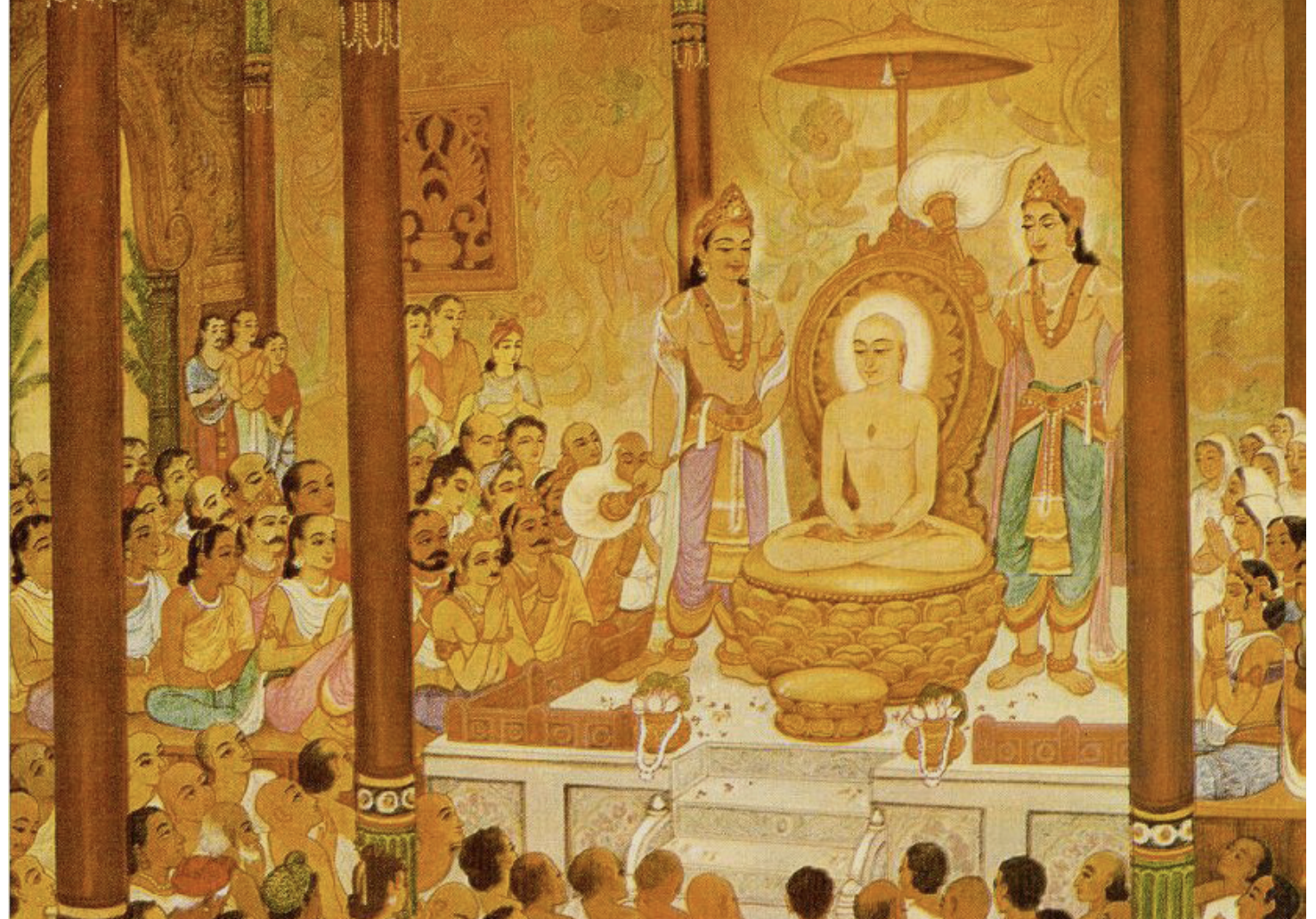
Harikeshbal Muni at the yajna

सक्खं खु दीसइ तवोविसेसो,
ण दीसइ जाइविसेस कोई

“Truly, the excellence of tapas is visible for all to see — but the excellence of caste is nowhere to be seen.”

About This Chapter

Harikeshiya

Harikeshiya — the twelfth chapter — tells the story of Harikeshbal, a monk born to a chandala family in Mathura who did six months of severe penance under a tinduk tree in Varanasi. The Guardian Deity (Yaksha) who dwelled in that tree became so moved by his practice that it vowed to serve and protect him.

When Harikeshbal went seeking alms at King Rudradev's great yajna, the Brahmin priests mocked his appearance, called him unfit to be seen, and ultimately ordered students to beat him out. The Guardian Deity's (Yaksha's) intervention — entering the monk's body to debate the Brahmins and then unleashing divine retribution on the attackers — forces a complete reversal: those who called him a dust-ghost prostrate themselves at his feet. The chapter closes with the monk redefining the very nature of fire-sacrifice and sacred bathing: the true yajna burns inside, and the true tirtha is dharma itself.

47 Sutras
Brahmins Addressed To
9 Sections
Adhyayana 12

The 47 Sutras

Each sutra is presented with the original Prakrit, English translation, and a simplified commentary.

Part I — The Monk of Lowest Birth, the Highest Virtues
12.1

सोवाग-कुल-संभूओ, गुणुत्तरधरो मुणी । हरिएसबलो णाम, आसी भिक्खू जिइंदिओ ॥१२.१॥

Born of the lineage of a soapmaker (chandala), yet bearing the highest of virtues — there was a monk named Harikeshbal, a bhikshu with complete mastery over the senses.

The chapter opens with a striking paradox that is its entire argument in compressed form. Harikeshbal is born of a chandala family — the lowest rung of the ancient Indian caste hierarchy — yet he "bears the highest of virtues" (gunuttara-dharo). The scripture places caste and virtue in direct, unambiguous contrast from the very first line, announcing the chapter's central philosophical argument before the story even begins. The word order is completely deliberate: birth comes first, virtues come second — to establish that these are independent, causally unrelated facts about the same person. In the ancient Indian caste system, the chandala (sometimes translated as "soapmaker," sometimes as "cremation-ground worker" or "outcast") was considered so ritually impure that higher-caste individuals would not allow even their shadow to fall upon them. Contact with a chandala was considered spiritually contaminating in the Brahmin worldview. Harikeshbal was born into precisely this social category, at the very bottom of the caste pyramid. Yet the very next attribute applied to him is "guṇuttara-dharo" — bearing the highest of virtues — which places him at the very top of the spiritual hierarchy. This is not literary irony for dramatic effect; it is a precise philosophical statement. The Jain position is that birth and virtue have absolutely no causal connection. A soul is not made noble by the family it happens to be born into, by its ancestors, by its birth rituals, or by any social status assigned to it by others. A soul becomes noble exclusively through its own conduct, discipline, and spiritual practice. By placing this paradox in the chapter's opening line, the entire argument is pre-stated: watch everything that follows and see which one is truly real — the accident of birth, or the achievement of character.

The simple version: The monk Harikeshbal was born to the lowest caste — yet he carried the highest virtues. The chapter announces its argument in its opening line: birth and worth are two different things.

Birth and VirtueCasteHarikeshbal
12.2

इरिएसण-भासाए, उच्चार-समिइसु य । जओ आयाणिणक्खेवे, संजओ सुसमाहिओ ॥१२.२॥

Disciplined in the carefulness of movement (iryā samiti), in speech-carefulness, in elimination — careful in the taking up and putting down of objects — restrained and well-concentrated.

Jain PrincipleVinaya · Discipline

Self-imposed order of thought, word, and deed transforms the soul.

This sutra catalogues Harikeshbal's moment-to-moment monastic practice using the precise formal vocabulary of Jain monastic discipline, which is important because it establishes exactly what kind of person is about to walk into the Brahmin fire-sacrifice arena. The five samitis (carefulness-codes) are the second architectural layer of Jain monastic conduct after the five great vows. They govern the monk's awareness in every ordinary activity throughout the day: iryā samiti — careful walking, watching every step to avoid treading on any living being; bhāṣā samiti — speaking with full care, ensuring no word is unnecessary, harsh, deceptive, or careless; eṣaṇā samiti — careful receiving of alms, checking food for living beings before accepting it; ādāna-nikṣepā samiti — careful picking up and putting down of objects, without speed or carelessness that might harm beings. Together with the three guptis that follow in sutra 3, these create eight overlapping systems of awareness that protect the soul from generating new karma through action. Each sounds simple when described but requires truly constant and wakeful attention that ordinary people rarely attempt to sustain for even an hour. The word "susamāhio" — well-concentrated, genuinely absorbed — is the key word of this sutra. Harikeshbal is not performing these disciplines mechanically as an external checklist or doing them out of obligation while his mind is elsewhere. He is genuinely, deeply absorbed in them — they have become his natural way of being, not a spiritual performance. This distinction between mechanical rule-following and genuine absorbed practice is crucial throughout the Uttaradhyayana. The commentary here firmly establishes that when Harikeshbal walks into the Brahmin fire-sacrifice arena in the next sutra, he carries this entire living architecture of discipline with him — and it does not leave him at the entrance gate.

The simple version: He was meticulous in every movement, every word, every action — all day, every day. This is what Jain monastic discipline looks like in practice.

Five SamitisRestraintMonastic Discipline
12.3

मणगुत्तो वयगुत्तो, कायगुत्तो जिइंदिओ । भिक्खट्टा बंभइज्जिम्म, जण्णवाड उवटिओ ॥१२.३॥

Guarded in mind, guarded in speech, guarded in body, with the senses conquered — seeking alms, he arrived at the Brahmin fire-sacrifice ground.

The three guptis (guardedness-codes) described in this sutra complete the monk's inner armor alongside the five samitis of sutra 2. The important distinction between them is this: while the samitis govern outward action — how you walk, how you speak, how you handle objects — the guptis govern the internal states that precede and accompany action: mana-guttī (mind-guardedness — not allowing thoughts of passion, anger, or attachment to arise and take hold), vacana-guttī (speech-guardedness — not allowing the mind's unguarded impulses to spill into words), and kāya-guttī (body-guardedness — not allowing the body to act without the mind's full participation and direction). Together, the five samitis and three guptis constitute the complete formal architecture of Jain monastic self-discipline — eight overlapping, mutually reinforcing systems of awareness that protect the soul from generating new karma through any of the three doors of action, speech, and mind. "Jitindriya" — with the senses fully conquered — is placed as a summary quality on top of all eight: Harikeshbal has not just practiced these disciplines as daily exercises; he has internalized them so completely that sense-pull no longer carries the force of compulsion over him. The senses still perceive — he is not blind or deaf — but what they perceive no longer automatically produces craving or aversion in the mind. With all of this as his living spiritual armor — completely interior, completely invisible to an outside observer — he approaches the Brahmin fire-sacrifice ground to seek alms. The irony embedded in the scene is structural and devastating: the most genuinely disciplined person in the entire story walks into the most elaborately "disciplined" (by Brahmin standards of ritual purity) sacred space — and is immediately treated as pollution, contamination, and an intrusion. The chapter is about to put these two definitions of discipline in direct contest and show which one is real.

The simple version: He was fully guarded in thought, word, and deed — and then walked right into a Brahmin fire-sacrifice to seek alms. His monastic discipline went with him everywhere, into every situation.

Three GuptisBrahmin YajnaAlms-Seeking
12.4

तं पासिऊणमेज्जंतं, तवेण परिसोसियं । पंतोवहिइवगरणं, उवहसंति अणारिया ॥१२.४॥

Seeing him approach — emaciated by penance, wearing minimal and worn garments — the ignoble ones mocked him.

Jain PrincipleTapa · Austerity

Deliberate practice that weakens karma and strengthens the soul.

His body bears the visible marks of sustained tapas: thinned, dried out by months of fasting and austerity ("taṇḍulopahāre" — parched like dried grain, no excess flesh remaining), wearing the barest minimal rags that a Jain monk is permitted to carry. This physical appearance is the exact opposite of the Brahmin priests who dress in freshly laundered white ritual garments, anoint themselves with fragrant oils and pastes, and perform elaborate, meticulous preparatory rites for the yajna in order to project an image of ceremonial purity. To Brahmin eyes thoroughly trained by tradition to associate purity with elaborate dress, external cleanliness, and impressive ritual preparation, the monk's appearance reads automatically as poverty, pollution, and spiritual disqualification. The social conditioning is total and instantaneous — they see rags and thinness and they categorize him as not-sacred without a moment of genuine perception. But the scripture's own judgment does not wait for the Brahmins to speak. The word "anariya" — ignoble, uncivilized, literally "not-Arya" — is already applied to the mockers in this very sutra, before they have said a single insulting word. This is fully deliberate. The Brahmin tradition prided itself above all others on being the most "Arya" — the most noble, most civilized, most sacred class in society. The scripture performs a perfect reversal: the very people who invoke the label "Arya" most frequently are, in this precise moment, anariya — ignoble in their inner character. Their outward purity of white garments and ritual oils conceals inner impurity of heart. The monk's outward thinness and worn clothing conceals inner fullness of virtue. The moral labels have been quietly, completely inverted before a single word of insult is spoken.

The simple version: His penance showed on his body — he was thin, wearing almost nothing. The ignoble ones saw this and laughed. The scripture calls them "ignoble" before recording a single word they say.

TapasMockeryIgnoble Conduct
12.5

जाइमयपिडत्थद्धा, हिंसगा अजिइंदिया । अबम्भचारिणो वाला, इमं वयणमब्बवी ॥१२.५॥

Those arrogant with the intoxication of birth-pride, who cause harm, who have not conquered the senses, who are not celibate — those foolish ones spoke these words:

CautionMana · Pride

Arrogance blocks the humility needed for genuine learning.

This sutra is structured as a formal judicial indictment delivered by the scripture itself. Before any Brahmin opens their mouth to speak a single word of insult, the text delivers a complete and detailed character assessment of the speakers. Four precise charges are laid: (1) jāti-mada-piḍatthaddha — made arrogant through intoxication with birth-pride. The word mada here is extremely specific: it is the intoxication of someone who has drunk too much alcohol. These people are not merely proud — they are drunk on the idea of their caste superiority, in a state of impaired judgment where normal reasoning has been replaced by the stupor of inherited status. (2) Hiṃsagā — violent. They participate in and facilitate animal sacrifice at every yajna; they are causing the deaths of living beings daily in the name of purity and religious merit. From a Jain perspective, this alone is the most serious possible violation of the first and most fundamental principle. (3) Ajitindriya — without conquered senses. The very quality that defines Harikeshbal's attainment — jitindriya (senses conquered), stated proudly in sutra 1 — is precisely what these Brahmins lack. They have not conquered their sense organs; their desires and aversions are fully operative. (4) Not celibate (abambhacārino) — meaning they engage in sexual life, which from a Jain monastic standpoint means they have not taken on the full spiritual discipline they claim to represent. With all four charges now formally on the record, what follows is a brilliant reversal: every quality these Brahmins are about to project onto the monk — impurity, unworthiness, spiritual pollution, disqualification — belongs to them by the scripture's own accounting. The technique here is philosophically devastating: by reading this sutra carefully, we already know who the genuinely impure party is before a single insult is spoken. The moral verdict is given to the reader first. What follows is merely the evidence confirming it.

The simple version: Before we hear the insults, we're told who the speakers are: arrogant about their birth, violent, sensually undisciplined, not celibate. They are about to call the monk unworthy — but the list describes them.

Birth-PrideJati-madaIrony
Part II — The Brahmins' Mockery
12.6

कयरे आगच्छइ दित्तरूवे, काले विकराले फोक्कणासे । ओमचेलए पंसुपिसायभूए, संकरदूसं परिहिरय कंठे ॥१२.६॥

"What is this dark, disfigured, flat-nosed thing that comes? In the lowest rags, like a dust-ghost — wearing around his neck cloth fit for a cremation ground!"

The insults in this sutra are precisely targeted at three categories: his physical appearance, his clothing, and his very presence. "Dittarūve" — disfigured in form; "kāle vikarāle" — dark and terrible-looking; "phokkanāse" — flat-nosed. These are attacks on his race, his color, his physical features. In the Brahmin ritual universe, only certain physical types were considered appropriate for sacred space. Then the clothing: "omacele" — in the lowest of rags; "paṃsupīsāyabhūe" — like a dust-ghost. The cloth he wears around his neck — a piece of the pratyālambana — they call "śaṃkaradūṣa," fitting only for a cremation ground. What they are describing is precisely the standard Jain monastic dress code: minimal, clean, unscented, without ornamentation. The monk is wearing exactly what he should be wearing by his own tradition. And they describe it as the clothing of a ghost and a corpse. The comparison to a "dust-ghost" (paṃsupīśāca) is particularly striking — they are saying he is not even a living human being, but a spirit of dead matter. The contempt could not be more total.

The simple version: They called him dark, ugly, dressed in cremation rags, like a dust-ghost. Every mark of his monastic simplicity they turned into a reason to despise him.

Caste ContemptAppearance MockeryBirth-Pride
12.7

कयरे तुमं इय अदंसणिज्जे, काए व आसा इहमागओ सि । ओमचेलया पंसुपिसायभूया, गच्छखलाहि किमहं ठिओसि ॥१२.७॥

"What are you — this thing unfit to be seen? What body or hope brings you here? You dust-ghost in the lowest rags — go away, you wretch! Why are you standing here?"

The language escalates from mockery to expulsion. "Adarshaniya" — literally "that which should not be seen" — is the formal language of untouchability taken to its extreme. It means: your mere presence in our field of vision is a violation. The word "āśā" (hope) in the question "what hope brought you here?" is deliberately cutting: what could a being like you possibly hope for in a place like this? The Brahmin tradition had detailed rules about whose presence contaminated a sacred ceremony, and a chandala's presence was considered among the most severe pollutants. But the irony embedded in the sutra runs deep: the monk who has "truly seen" the nature of existence — who has the vision of the realized soul — stands before men who are spiritually blind. They tell him he is unfit to be seen. In Jain philosophy, "true sight" (samyag-darśana) is the first and most important of the three jewels of liberation. The Brahmins who declare him "unfit to be seen" are demonstrating their own absence of it.

The simple version: "You are not even fit to be seen. What are you doing here? Leave." The men who are spiritually blind tell the man with true vision that he is not worth seeing.

UntouchabilityExpulsionIrony of Sight
Part III — The Guardian Deity (Yaksha) Speaks
12.8

जक्खो तहिं तिंदुयरुक्खवासी, अणुकंपओ तस्स महामुणिस्स । पच्छायइत्ता णियगं सरीरं, इमाई वयणाइमुदाहरित्था ॥१२.८॥

The Guardian Deity (Yaksha) who dwelled in that tinduk (ebony) tree — filled with compassion for that great ascetic — entered his body and spoke these words:

The divine protector arrives — and notice: not with fire or thunder, not with the roar of divine retribution. He arrives with anukampā — compassion. This word is important in Jain philosophy: it is compassion for a being's suffering, the feeling that moves one to act for their relief. The Guardian Deity (Yaksha) had lived in the tinduk (Indian ebony) tree under which Harikeshbal practiced six months of severe penance. Six months of watching the monk's extraordinary discipline unfold — the careful steps, the restrained speech, the long fasts, the complete stillness in meditation. That extended witness created a devotion so deep it transformed the Guardian Deity from a forest spirit into a committed protector. The fact that the Yaksha enters the monk's body to speak — rather than appearing as a terrifying divine figure — is also notable: the monk himself remains unaware and undisturbed throughout. His equanimity is so complete that even while being inhabited by a divine being and speaking divine words, he is simply present. The Guardian Deity borrows the monk's voice. The monk lends it without drama.

The simple version: The Guardian Deity (Yaksha) who had watched this monk practice for six months was moved by compassion. He entered the monk's body and prepared to answer the Brahmins himself.

Guardian Deity (Yaksha)Divine ProtectionCompassionTinduk Tree
12.9

समणो अहं संजओ बंभयारी, विरओ धणपयण परिग्गहाओ । परप्पवित्तस्स उ भिक्खकाले, अण्णस्स अट्टा इहमागओमि ॥१२.९॥

"I am a shramana — restrained, celibate, withdrawn from wealth and all possessions. I have come here at alms-time for the merit of another — to give you the benefit of giving."

Speaking through Harikeshbal's body, the Guardian Deity (Yaksha) answers the Brahmins' contemptuous "what are you?" with a precise, four-part self-definition. "Samaṇo ahaṃ" — I am a shramaṇa, a striver. The word shramaṇa means "one who strives" — specifically one who strives inwardly, against the passions and attachments that bind the soul. "Sañjayo" — restrained, specifically by the samitis and guptis detailed in sutras 2 and 3. "Bambhayārī" — celibate, meaning not just sexually continent but completely withdrawn from all sensory indulgence. "Virayo dhaṇa-payaṇa-pariggahāo" — withdrawn from wealth and all possessiveness. And then the inversion: "parapavittassa bhikkha-kāle" — for the merit of another, at alms-time. He has not come to receive charity. He has come to give the Brahmins the opportunity to generate merit by giving. This reverses the entire framework of the Brahmin yajna: the ceremony was supposed to generate merit by having Brahmins receive gifts from the king. The monk points out that the real merit-generator is giving to the qualified recipient — and he is offering them that opportunity. They are refusing spiritual treasure while thinking they are guarding ritual purity.

The simple version: "I am a shramana — celibate, possessionless, disciplined. I have come so that *you* can earn merit by giving. The charity benefits the giver."

ShramanaCelibacyBenefit of Giving
12.10

वियरिज्जइ खज्जइ भुज्जइ य, अण्णं पभूयं भवयाणमेयं । जाणाहि मे जायणजीविणु ति, सेसावसेसं लहद तवस्सी ॥१२.१०॥

"This abundant food is being distributed, eaten, and enjoyed — it belongs to all of you. Know me as one who lives by begging — the ascetic takes only what remains after all others have eaten."

The request is made as small and non-threatening as possible. The Guardian Deity (Yaksha) does not argue about rightful access or contest the Brahmins' ritual control. Instead: you are distributing, eating, and enjoying abundant food among yourselves — I am just asking for what remains at the end, for the sake of an ascetic (tapassī). The word "sesa-vasesaṃ" — what remains after what remains — is the absolute minimum: leftovers of leftovers. In the context of a great royal yajna with enormous quantities of food prepared, there would be abundant surplus. Even the surplus's surplus would constitute a significant amount of food. And the monk is asking only for that. This modesty is not weakness — it is a deliberate rhetorical move: the request is so small that its refusal will expose the scale of the Brahmins' pride. They refuse because of who is asking, not because of what is asked. The word "tapassī" is placed at the sentence's end with quiet emphasis: this is who is asking — an ascetic, a person of spiritual standing.

The simple version: "I just want what is left after everyone else has eaten. I am last in line." Even this modest request will be denied.

Alms ProtocolModestyAscetic Discipline
12.11

उवक्खडं भोयण माहणाणं, अत्तटिृयं सिद्धमिहेगपक्खं । ण उ वयं एरिसमण्णपाणं, दाहामु तुझं किमिहं ठिओ सि ॥१२.११॥

"This food has been prepared by the Brahmins, for our own use, well-prepared here for one side only. We will not give such food and water to you — why are you still standing here?"

The Brahmins' refusal is explicit and categorical. They make three distinct claims: (1) The food was prepared by Brahmins ("māhaṇāṇaṃ"). (2) It was prepared for our own use ("attaṭhiyaṃ"). (3) It has been perfected here for one party only ("ekapakkhaṃ"). Not only will they not give the food — they cannot, from their perspective: the very ritual purity of the food would be compromised by giving it to a chandala. This is the logic of ritual purity operating at its most rigid: the food itself has a category (pure, Brahmin-appropriate), and that category cannot be transferred. They have not engaged with a single argument about virtue, restraint, or spiritual qualification. The criterion is purely categorical: born wrong = excluded. The chapter's entire philosophical argument from here forward is a systematic demolition of this category-logic.

The simple version: "This food is ours — prepared for us, by us. We won't give any of it to you. Why are you still standing here?" The first argument: you're the wrong category of person.

Caste-Based DenialExclusionFood Refusal
Part IV — The Debate: Who Is the True Merit-Field?
12.12

थलेसु बीयाइं ववंति कासगा, तहेव णिण्णेसु य आससाए । एयाए सद्धाए दलाह मज्झं, आराहए पुण्णमिणं खु खेत्तं ॥१२.१२॥

"Just as farmers sow seeds on dry ground and also on low-lying ground with hope — with that same faith, give to me. Truly, this field (the monk's soul) is a merit-fulfilling field."

The Guardian Deity (Yaksha) responds to the Brahmins' categorical refusal by meeting them in their own conceptual language. The Brahmin tradition uses the metaphor of "field" (kṣetra) extensively for the qualified recipient of donations: you sow your charitable seeds in the right field, and the merit grows. The Guardian Deity adopts this very image and applies it directly: "with the same faith (sraddhā) with which a farmer plants in dry ground or wet ground — plant here, in me. This field (kṣetraṃ) is truly merit-fulfilling (puṇṇaṃ)." The argument is precise: the farmer's criterion for choosing a field is its productivity — can it grow a harvest? Not whether the field is "Brahmin-type" or "chandala-type" ground. Ground is either productive or it isn't. Similarly, the Jain criterion for a merit-field is the recipient's ethical and spiritual qualification — not birth. The monk's five samitis, three guptis, and sense-mastery make him the most productive merit-field in that yajna ground. The Brahmins are refusing to plant in the best soil available while insisting on less fertile ground because it has a prestigious label on it.

The simple version: "A farmer plants seeds in any field with hope of a harvest. Plant your charity here — this monk's soul is a merit-field worth sowing."

Merit-Field MetaphorAgricultureCharity
12.13

खेताणि अम्हं विज्याणि लोए, जिहिं पकिण्णा विरुहंति पुण्णा । जे माहणा जाइ-विज्जोववेया, ताइं तु खेताइं सुपेसलाइं ॥१२.१३॥

"Our fields are known in the world — those in which merit-seeds grow when sown. Brahmins endowed with birth and learning — those are the excellent fields."

Wrong View Refuted Brahminism (Brāhmaṇa-dharma) · Jāti-based merit-field

The Brahmin tradition held that charitable donations must go to Brahmins of proper birth and Vedic learning (jāti + vijjā) to generate spiritual merit — no other recipient is valid.

The Brahmins accept the agricultural metaphor and immediately fight within it. They say: "Our fields are known (vijyāṇi loe) — these are the recognized fields in the world." Two qualifications make a Brahmin a valid merit-field: jāti (correct birth in a Brahmin lineage) and vijjā (Vedic learning). Both are required. "Supesalāiṃ" — excellent fields. This is actually the Brahmins' strongest argument, stated plainly: we are the proven recipients with a long established tradition of merit-generation for donors. Every major Vedic text from the Ṛgveda onwards endorses giving to properly born and educated Brahmins as the highest act of charity. The Guardian Deity (Yaksha) does not dismiss this tradition flippantly — the response in the next two sutras (14–15) will accept the categories of "birth" and "learning" as valid metrics, and then show that the Brahmins before him fail on both counts by their own definitions.

The simple version: "Our fields are proven — Brahmins with good birth and Vedic learning. Give to us. We are the proper merit-field." The Brahmins state their best case.

Brahmin Merit-FieldBirth and LearningCounter-Argument
12.14

कोहो य माणो य वहो य जेसिं, मोसं अदत्तं च परिग्गहं च । ते माहणा जाइविज्जाविहूणा, ताइं तु खेताइं सुपावयाइं ॥१२.१४॥

"Those who have anger and pride and violence, lying, taking what is not given, and possessiveness — those Brahmins are truly bereft of both birth and learning. Those are the corrupted fields."

CautionKrodha · Anger

Anger destroys equanimity and generates the most intense karma.

This is the philosophical masterstroke of the debate. The Guardian Deity (Yaksha) does not reject the Brahmins' categories — he accepts them and uses them as the instrument of refutation. "You say the excellent field has birth and learning. Fine. Now look at what these Brahmins here actually have: kodhā ca māṇo ca vahā ca mosam adattam ca pariggaham ca." Six qualities are listed: anger, pride, violence, lying, taking what is not given (theft in ritual context), possessiveness. These are not minor flaws — these are the six core ethical failures in the Jain ethical system, corresponding directly to the transgressions of the five great vows. The verdict: "te māhaṇā jātivijaāvihūṇā" — those Brahmins are bereft of both birth and learning. The word "vihūṇā" (bereft, empty) is exact: it is not that they have partial birth-quality or partial learning-quality. They are empty of both, regardless of their lineage certificates or their ability to recite Vedic verses. Because "birth" and "learning" in the deepest sense are about what kind of being you have become — and a being with six ethical failures has not become noble, regardless of parentage.

The simple version: "You list birth and learning as qualifications. But what about anger? Pride? Violence? Lying? Theft? A Brahmin with those qualities is bereft of both birth and learning. That is a corrupted field."

Six VicesTrue BrahminhoodEthical Disqualification
12.15

तुडभेत्थ भो भारधरा गिराणं, अट्टुं ण जाणाह अहिज्ज वेए । उच्चावयाइं मुणिणो चरंति, ताइं तु खेताइं सुपेसलाइं ॥१२.१५॥

"Oh, you who bear the heavy burden of sacred words but do not know their meaning, even while studying the Vedas — monks practice equally with all beings, high and low. Those are the excellent fields."

The critique sharpens: the Brahmins carry Vedic words as a "burden" (bharadhara) without understanding their meaning (artham na janatha). Meanwhile, monks practice uniform ethical conduct — they do not rank beings by birth, they apply equal non-harm to all. The monk who lives this equality is the true excellent field. Words versus living truth.

The simple version: "You carry Vedic words as a burden but don't understand them. Monks live the truth — they practice equally with all beings. That is the excellent field."

Vedic HypocrisyMonastic EqualityUnderstanding vs. Recitation
12.16

अज्झावयाणं पडिकूलभासी, पभासे किण्णु सगासिं अम्हं । अवि एवं विणस्सउ अण्णपाणं, ण य णं दाहामु तुमं णियंठा ॥१२.१६॥

"Why does this one speak against our teachers? What is he saying to us? Even if this food perishes — we will not give it to you, O Nirgrantha!"

CautionMana · Pride

Arrogance blocks the humility needed for genuine learning.

The Brahmins' philosophical argument has collapsed but their pride has not. They shift from debate to dismissal. "Nirgrantha" — meaning "one without knots of attachment" — is technically the highest compliment for a Jain monk, but here it is used as a slur. The food can rot. They will not give it to a chandala monk. Pride defeats reason entirely.

The simple version: "Why is he arguing against our teachers? We don't care what he says — even if the food rots, we won't give it to a Jain. Case closed." Pride wins over reason.

Pride Defeating ReasonDismissalNirgrantha
12.17

समिईहि मज्झं सुसमाहियस्स, गुत्तीहिं गुत्तस्स जिइंदियस्स । जइ मे ण दाहित्य अहेसिणिज्जं, किमज्ज जण्णाण लहित्थ लाहं ॥१२.१७॥

"If you will not give what is due — to me who is restrained by the samitis, guarded by the guptis, with senses conquered — then what gain has your yajna attained today?"

The Guardian Deity (Yaksha) delivers the decisive philosophical blow. The entire purpose of a yajna is to generate spiritual merit by giving to a worthy recipient. If you refuse the most qualified recipient possible — a monk fully practicing all five samitis and three guptis, with complete sense-mastery — then your fire-sacrifice is empty. You lit the fire and earned nothing. The yajna defeats itself.

The simple version: "I am the most qualified recipient possible. If you won't give to me, what did your entire fire-sacrifice actually accomplish? What merit did you earn today?"

Empty RitualTrue YajnaSpiritual Merit
Part V — The Assault and Princess Bhadra
12.18

के इत्थ खत्ता उवजोइया वा, अज्झावया वा सह खंडिएहिं । एयं खु दंडेण फलेण हंता, कंठिम्म घेतूण खलिज्ज जो णं ॥१२.१८॥

"Who is the treasurer here, who the attendants, who the teachers with the students? Let someone seize this one by the neck with stick or club, beat him, and throw him out!"

Argument failed. Force follows. King Rudradev — who presides over the yajna — orders his personnel to physically assault and expel the monk. This is the caste system's final argument: when words fail, violence. It is not the Brahmins alone now — it is royal authority ordering the beating of a mendicant monk seeking alms.

The simple version: "Argument over. Someone grab him by the neck and beat him out." When the debate is lost, caste violence is the last resort.

Caste ViolenceRoyal AuthorityForce
12.19

अज्झावयाणं वयणं सुणित्ता, उद्धाइया तत्थ बहू कुमारा । दंडेहिं वित्तेहिं कसेहिं चेव, समागया तं इसिं तालयंति ॥१२.१९॥

Hearing the teachers' words, many students rushed forward — with sticks, straps, and whips — and came together striking that rishi.

The students are "uddhaiya" — they fly at the instruction. The violence is collective, sanctioned by authority, ritualized almost — many against one. The monk who has practiced complete bodily guardedness (kayagutto) now stands receiving blows while remaining in equanimity. The Guardian Deity (Yaksha) has not yet acted. The monk's stillness is itself the teaching.

The simple version: At the teachers' word, the students swarmed him with sticks, straps, and whips. Many against one monk who stood without breaking.

Mob ViolenceMonastic EquanimityStudent Obedience
12.20

रण्णो तहिं कोसिलयस्स धूया, भद्द ति णामेण अणिंदियंगी । तं पासिया सण्य हम्ममाणं, कुद्धे कुमारे परिणिव्ववेइ ॥१२.२०॥

The daughter of King Kosala, named Bhadra — of irreproachable form — seeing him being struck, pacified the enraged students.

Princess Bhadra enters. She has a personal history with this monk — the Guardian Deity (Yaksha) once caused her to be afflicted when she threw mud at the monk, and she was only healed when the monk refused to accept her as a wife despite her father's offer. She is the one voice of recognition in the mob. "Anindiyangī" — of irreproachable form — contrasts with the monk they are calling ugly and repulsive.

The simple version: Princess Bhadra stepped forward and stopped the students. She recognized this monk from a prior encounter — she knew exactly who he was.

Princess BhadraInterventionRecognition
12.21

देवाभिओगेण णिओइएणं, दिण्णा मु रण्णा मणसा ण झाया । णरिंद देविंदसिभंविंदिएणं, जेणामि वंता इसिणा स एसो ॥१२.२१॥

"By divine command I was assigned and given by the king, though not truly accepted in his heart — by one equal to lord of men, lord of heaven, and lord of creation — by that rishi. This is that rishi."

Bhadra reveals the backstory to King Rudradev: this monk is the same one who, when her father offered her to him, refused — because he was an absolute celibate. The Guardian Deity (Yaksha) had created a prior test for the king, but the monk himself never accepted. She testifies to his celibacy by citing it as established fact, not hearsay.

The simple version: "This is the monk who turned me down when my own father offered me to him. He is a celibate — completely beyond desire." Bhadra identifies him by his integrity.

CelibacyPrior StoryBhadra's Testimony
12.22

एसो हु सो उग्गतवो महप्पा, जिइंदिओ संजओ बंभयारी । जो मे तया णेच्छइ दिज्जमाणिं, पिउणा सयं कोसिलएण रण्णा ॥१२.२२॥

"This is truly that fierce ascetic, great-souled, with senses conquered, restrained, celibate — who did not desire me when I was being offered by my own father, King Kosala himself."

Bhadra restates the case with full force. The man they are beating — ugly, low-caste, dressed in rags — turned down a princess offered by a king. His celibacy and self-mastery are not claims or descriptions. They are proven facts from an event that King Rudradev's own court can verify.

The simple version: "A king offered me to him. He didn't want me. That is the kind of monk he is." This is proof of character, not description.

Proven CelibacySelf-ControlRoyal Testimony
12.23

महाजसो एस महाणुभागो, घोरव्वओ घोरपरक्कमो य । मा एवं हीलेह अहीलिणिज्जं, मा सव्वे तेणं भे णिढ्ढहेज्जा ॥१२.२३॥

"This one is of great glory, great power, of fierce vows and fierce valor — do not disrespect one who is not to be disrespected. Do not let him burn all of you."

Bhadra's tone shifts from testimony to warning. She has seen the Guardian Deity's (Yaksha's) power from personal experience. She knows this monk is protected by a being capable of terrible force. Her warning is entirely practical: stop, before this situation goes much further. It already has further to go.

The simple version: "He is powerful — his vows, his discipline, his divine protector. Don't touch him. He could burn all of you." The warning comes from direct experience.

WarningTapas PowerDivine Protection
12.24

एयाइं तीसे वयणाइं सोच्चा, पत्तीइ भद्दाइ सुभासियाइं । इसिस्स वेयावडियट्टुयाए, जक्खा कुमारे विणिवारयंति ॥१२.२४॥

Hearing those well-spoken words of the lady Bhadra — for the service of the rishi — the Guardian Deities (Yakshas) restrained the students.

The Guardian Deities (Yakshas) act immediately after Bhadra speaks. Her intervention and theirs move together in purpose: to protect the monk. "Veyavadiya" — service of the rishi — is what drives the Guardian Deities (Yakshas). This is a hierarchy of devotion: the Guardian Deity (Yaksha) serves the monk, and Bhadra speaks truth on behalf of the monk. Both are moved by recognition of who he is.

The simple version: Bhadra spoke. The Guardian Deities (Yakshas) heard. The students were stopped. Service to the monk is the Guardian Deities' (Yakshas') entire purpose.

Guardian Deity (Yaksha) ServiceDivine InterventionBhadra's Role
12.25

ते घोरूवा ठिय अंतलिक्खे, असुरा तहिं तं जणं तालयंति । ते भिण्णदेहे रुहिरं वमंते, पासिंतु भद्दा इणमाहु भुज्जो ॥१२.२५॥

Those terrifying forms — the asuras standing in the sky — struck that assembly. Seeing them with bodies pierced, vomiting blood, Bhadra spoke again:

The divine retribution is visceral: asuras hang in the sky and strike. The students who beat the monk now have broken bodies and are vomiting blood. This graphic reversal is the scripture's declaration: those who assault an ascetic pay precisely in kind. Bhadra witnesses this consequence and speaks further.

The simple version: The divine beings struck back — the students who beat the monk were now broken and bleeding. Bhadra saw this and spoke again.

Divine RetributionConsequenceAsuras
Part VI — The Guardian Deity's (Yaksha's) Wrath
12.26

गिरिं णहेहिं खणह, अयं दंतेहिं खायह । जायतेयं पाएहिं हणह, जे भिक्खुं अवमण्णह ॥१२.२६॥

"Dig a mountain with your fingernails. Chew iron with your teeth. Strike living fire with your bare feet. But do not disrespect a bhikshu."

Bhadra's triple image escalates in absurdity to prove a precise point: the impossible is more survivable than disrespecting a monk. Mountain against fingernails, iron against teeth, fire against bare feet — the hardest possible materials against the softest human instruments. Each is survivable in comparison to what happens when you mock a fully realized ascetic.

The simple version: "Try to scratch a mountain with your fingernails. Bite through iron. Walk into fire. All of those are more survivable than disrespecting a monk."

Consequences of DisrespectMonk's SanctityTriple Warning
12.27

आसीविसो उग्गतवो महेसी, घोरव्वओ घोरपरक्कमो य । अगणिं व पक्खंद पयंगसेणा, जे भिक्खुयं भत्तकाले वहेह ॥१२.२७॥

"He is like a venomous serpent — a great sage of fierce asceticism, fierce vows, and fierce valor. Like moths flying into fire — those who strike a bhikshu during alms-time will be destroyed."

CautionKrodha · Anger

Anger destroys equanimity and generates the most intense karma.

Two metaphors converge: the monk as venomous serpent (dangerous to touch), and the students as moths flying into flame (destroyed by their own action). The timing is emphasized — "bhattakale" (during alms-time) — because assaulting a monk at this sacred moment compounds the offense beyond ordinary calculation.

The simple version: "He is like a venomous snake — don't touch him. And you who attacked him during alms-time — you are like moths flying straight into fire."

Venomous Serpent MetaphorMoth-Flame MetaphorSacred Alms-Time
12.28

सीसेण एयं सरणं उवेह, समागया सव्वजणेण तुभे । जइ इच्छह जीवियं वा धणं वा, लोगं पि एसो कुविओ डहेज्जा ॥१२.२८॥

"Bow your heads and seek refuge — all of you, gathered together. If you wish for life or wealth — this one, if fully angered, could burn even the world."

CautionKrodha · Anger

Anger destroys equanimity and generates the most intense karma.

The warning becomes explicit command: bow now. The consequence stated is maximum — not just your lives but "the world" could be burned by an angered ascetic of this magnitude. This is the traditional Indic understanding of tapasya as accumulating tejas — a vast heat and force beyond ordinary reckoning, stored in the body through years of penance.

The simple version: "Bow your heads. All of you. Right now. If you want to survive — this monk, if fully angered, could burn the entire world. This is your one chance."

Tapas PowerSeek RefugeCosmic Consequences
12.29

अवहेडिय पिट्टिसउत्तमंगे, पसारियाबाहु अकम्मचेट्टे । णिठभेरियच्छे रुहिरं वमंते, उड़ुमुहे णिग्गयजीह णेत्ते ॥१२.२९॥

With backs broken and heads bowed, arms outstretched, unable to perform any action — with eyes open wide, vomiting blood, faces upturned, tongues protruding:

The visual image of the students caught by the Guardian Deity's (Yaksha's) force is deliberately harrowing: broken backs, outstretched arms, protruding tongues, eyes wide and rolling. This is total physical helplessness — the violent mob reduced to complete incapacity. The verse holds this image without comment, letting the reversal register fully before the scene shifts.

The simple version: Backs broken. Faces up. Eyes open. Tongues out. Vomiting blood. The boys who beat the monk were now completely helpless, unable to move.

Divine PunishmentPhysical ReversalHelplessness
Part VII — The Miracle Salutation
12.30

ते पासिया खंडियं कट्टुभूए, विमणो विसण्णो अह माहणो सो । इसिं पसाएइ सभारियाओ, हीलं च णिंदं च खमाह भंते ॥१२.३०॥

Seeing them reduced to helplessness, the Brahmin (Rudradev) became despondent and troubled. He took his wife and appealed to the rishi: "O Lord! Forgive the disrespect and the contempt."

The reversal is complete. The king who ordered the beating comes with his wife to beg forgiveness. "Vimanno visanno" — despondent, troubled — captures the collapse of a man whose power has been exposed as nothing before genuine spiritual force. The formal address "Bhante" (O Lord) is a full reversal of "go away, you wretch" from sutra 7.

The simple version: The king saw his students broken and was shaken. He came with his wife to beg forgiveness from the monk he had ordered beaten.

ReversalRemorseFormal Submission
12.31

बालेहिं मूढेहिं अयाणएहिं, जं हीलिया तस्स खमाह भंते । महप्पसाया इसिणो हवंति, ण हु मुणी कोवपरा हवंति ॥१२.३१॥

"O Lord! Forgive the disrespect done by these foolish, ignorant children. Great rishis are supremely gracious — monks are truly not given to anger."

CautionKrodha · Anger

Anger destroys equanimity and generates the most intense karma.

The king's appeal is careful: he does not ask for special mercy as personal favor. He appeals to the nature of rishis themselves — they are gracious by their very nature, they do not stay angry. He is asking Harikeshbal to be what he already is, not to make an exception. This is a deeper form of request than simple begging.

The simple version: "Forgive these ignorant children. You are a rishi — compassionate by nature. Monks don't stay angry." He appeals to what the monk is, not just to his mercy.

Nature of the MonkForgivenessCompassion
12.32

पुव्विं च इणिह च अणागयं च, मणप्पओसो ण मे अत्थि कोई । जक्खा हु वेयावडियं करेंति, तम्हा हु एए णिहया कुमारा ॥१२.३२॥

"There was no anger in my mind before, now, or in the future — not toward anyone. It is the Guardian Deity (Yaksha) who serves me that acts — it was through him alone that the boys were brought to this state."

CautionKrodha · Anger

Anger destroys equanimity and generates the most intense karma.

The monk's response is startling in its purity: he was not angry. Not before the beating, not during it, not now. He did not command or wish for the Guardian Deity's (Yaksha's) violence. The Guardian Deity (Yaksha) acted from its own compassion and devotion. The monk's equanimity — which the Brahmins could not see past his surface to find — was real throughout every moment of the assault.

The simple version: "I was never angry — at any point. I did not do this. The Guardian Deity (Yaksha) who protects me acted on his own. I hold no anger toward anyone."

True EquanimityNo AngerGuardian Deity (Yaksha) Acting Independently
12.33

अत्थं च धम्मं च वियाणमाणा, तुभे ण वि कुप्पह भूइपण्णा । तुभं तु पाए सरणं उवेमो, समागया सव्व जणण अम्ह ॥१२.३३॥

(Rudradev said:) "You, who fully know the meaning of scriptures and the nature of dharma — you of auspicious intelligence, you never grow angry. All of us, having come together, accept refuge at your feet."

The king makes a formal declaration of spiritual surrender. "Sharanam uvemo" — we take refuge — is the language of disciples before a teacher. The yajna that was meant to generate merit through Brahmin ritual has produced this instead: a king, his wife, and his entire court taking refuge at a chandala monk's feet. The chapter's central reversal arrives in its fullest form.

The simple version: "You know the scriptures and their meaning. You have wisdom and never anger. All of us take refuge at your feet." The yajna's real result: a king becomes a student.

RefugeSpiritual SurrenderTrue Dharma
12.34

अच्चेमु ते महाभाग, ण ते किंचि ण अच्चिमो । भुंजाहि सालिमं कूरं, णाणावंजण संजुयं ॥१२.३४॥

"O Mahabhaga (Great One), we worship you. There is nothing of yours that we do not worship. Eat this rice prepared with many condiments."

"Mahabhaga" — great-souled, great-fortuned one — from the same mouths that called him "dust-ghost" and "unfit to be seen." They now offer the finest rice with full condiments, and declare that there is nothing about him — not even the dust of his feet — that they do not worship. The reversal of address is the reversal of the entire chapter.

The simple version: "O Great One, we worship you entirely. Please eat this finest rice." The words "O Great One" from the same mouths that called him a dust-ghost.

Complete ReversalWorshipAlms Offered
12.35

इमं च मे अत्थि पभूयमण्णं, तं भुंजसु अम्ह अणुग्गहट्टा । बाढं ति पडिच्छइ भत्तपाणं, मासस्स उ पारणए महप्पा ॥१२.३५॥

"This is our abundant food — receive it, to bless us." The great one, saying "very well," accepts food and water — breaking his month-long fast.

The monk accepts. Simply. "Badham" — very well. No grudge, no extended forgiveness ritual, no lecture. He receives alms as a monk should. The detail given is striking: this moment breaks his month-long fast. He had fasted for an entire month. He came to this very yajna purely to seek alms. He is now received by his attackers as a great one.

The simple version: The monk said "very well" and accepted their food. He was breaking a month-long fast. The same people who beat him now fed him — and he accepted simply, without a word of reproach.

Simple AcceptanceMonth-Long FastGrace
Part VIII — The Glory of the Tapasvi Muni
12.36

तिहयं गंधोदय-पुप्फवासं, दिव्वा तिहिं वसुहारा य घुट्टा । पहयाओ दुंदुहीओ सुरेहिं, आगासे अहो दाणं च घुट्टुं ॥१२.३६॥

At that moment — when the tapasvi muni received food — the gods showered fragrant water and flowers, struck divine dundubhis (celestial drums), and in the sky the proclamation rang: "Aho dana! Aho dana!" — "Excellent gift! Excellent gift!"

Jain PrincipleTapa · Austerity

Deliberate practice that weakens karma and strengthens the soul.

The cosmos itself responds. Gods shower flowers; celestial drums thunder; the heavens ring with proclamation. This is the Jain universe's declaration that the moment just completed — a chandala monk fed by a yajna Brahmin after being beaten — was one of the most meritorious acts of giving in that entire fire-sacrifice. The yajna found its purpose at last.

The simple version: The moment the monk received food, the heavens erupted: flowers rained, divine drums thundered, the sky rang with "Excellent gift!" The cosmos confirmed what the Brahmins had just learned.

Divine ConfirmationCosmic ResponseTrue Dana
12.37

सक्खं खु दीसइ तवोविसेसो, ण दीसइ जाइविसेस कोई । सोवागपुत्तं हरिएस साहुं, जस्सेरिस्सा इड्डि महाणुभागा ॥१२.३७॥

"Truly, the excellence of tapas is visible for all to see — but the excellence of caste is nowhere to be seen. Look at Harikesh the muni, son of a soapmaker — of such magnificent power and glory."

Jain PrincipleTapa · Austerity

Deliberate practice that weakens karma and strengthens the soul.

The proclamation of the gods — or the commentary of witnesses — delivers the chapter's explicit moral. What is visible? The monk's tapas-power, divine protection, celestial flowers, thundering drums. What is not visible? Any distinction of caste. The proof is standing right there: a chandala's son, and magnificent divine glory surrounding him. The argument that began in sutra 1 is now sealed by the cosmos itself.

The simple version: "See it with your own eyes: tapas is visible — caste is not. Look at this son of a soapmaker and the glory surrounding him. That is the proof."

Tapas Over CasteDivine ProclamationChapter's Core Teaching
Part IX — Bhav-Guardian Deity (Yaksha): The True Fire and the True Bath
12.38

किं माहणा जोइं समारभंता, उदएण सोहिं बहिया विमग्गहा । जं मग्गहा बाहिरियं विसोहिं, ण तं सुद्दिढुं कुसला वयंति ॥१२.३८॥

"O Brahmins — kindling the fire and seeking external purification in water — why do you search for purification that is outside? What the wise call true purification is not what you are looking for."

Wrong View Refuted Vedic Ritualism (Karma-kāṇḍa) · External fire and water purify the soul

The Vedic ritual tradition taught that lighting the sacred fire (agni) and bathing in sacred rivers (tīrtha-snāna) purifies a person from sin and generates spiritual merit for the next life.

The monk now turns teacher. King Rudradev asked how to properly conduct a yajna — and the answer begins with a question that undermines the entire premise: why are you looking outside? External fire and external water do not purify the soul. The "kusala" (knowers of truth) define purification differently — and what they call true purification, no river or fire can provide.

The simple version: "You light fire. You pour water. You search for purity in external things. The wise do not call that purification."

Inner vs. Outer PurityTrue PurificationRitual Critique
12.39

कुसं च जूवं तण कट्टुमिंगं, सायं च पायं उदगं फुसंता । पाणाइं भूयाइं विहेडयंता, भुज्जो वि मंदा पगरेह पावं ॥१२.३९॥

"O dull-minded ones — touching kusha grass, the sacrificial post, straw, and wood; morning and evening touching water — all while harming water-beings, earth-beings, and fire-beings — you accumulate more sin again and again."

Wrong View Refuted Vedic Animal Sacrifice / Agni-hotra (Yajna-karma) · Ritual touching and burning purify the soul

The Vedic agni-hotra system prescribed touching kusha grass, sacrificial posts, and burning plant and animal matter in daily rituals, believing this external practice accumulated spiritual merit rather than karma.

The critique is precise: Brahmin rituals involve touching and burning living matter — kusha grass, wood, all containing single-sensed beings. Morning and evening they touch water, disturbing water-beings. The rituals intended to purify actually accumulate himsa and therefore karma. The Brahmins are generating sin in the very name of purity.

The simple version: "Your rituals — touching grass, burning wood, pouring water — harm living beings at every step. You are generating more karma, not less. The ritual meant to purify creates more pollution."

Ritual HimsaSingle-Sensed BeingsKarma Accumulation
12.40

कहं चरे भिक्खु वयं जयामो, पावाइं कम्माइं पणुल्लयामो । अक्खाहि णे संजय जक्खपूइया, कहं सुजट्टुं कुसला वयंति ॥१२.४०॥

(Rudradev asked:) "How should we practice, O bhikshu? How should we conduct a yajna? How do we remove sinful karma? O restrained one, worshipped by Guardian Deities (Yakshas) — tell us how the wise say a true yajna should be performed."

The king asks sincerely. The address "yaksha-pujiya" (worshipped by the Guardian Deity/Yaksha) acknowledges the monk's divine stature from the very same king who ordered him beaten. The yajna that was supposed to be conducted by Brahmins for the king is now being redefined by the very monk they tried to expel. The questioner has become the student.

The simple version: "Tell us — how do we practice? How do we conduct a real yajna? How do we remove karma? You who are worshipped even by Guardian Deities (Yakshas) — tell us what the wise say."

Sincere InquiryTrue YajnaKing as Student
12.41

छज्जीवकाए असमारभंता, मोसं अदत्तं च असेवमाणा । परिग्गहं इत्थिओ माण-मायं, एयं परिण्णाय चरिता दता ॥१२.४१॥

"Not causing harm to the six categories of living beings, not practicing lying or theft, not accepting possessiveness, women, pride, or deceit — one who has renounced these and practices self-restraint: that is the truly endowed one (datta)."

CautionMana · Pride

Arrogance blocks the humility needed for genuine learning.

The five great vows of Jain monastic life are here presented as the true definition of "datta" — one who is truly endowed, truly worthy of receiving gifts. The Brahmins defined worthiness by birth; the monk defines it by ethical conduct: non-harm across all six life-categories, non-lying, non-stealing, non-possession, celibacy, non-pride, non-deceit. This is the redefinition of the merit-field argument from sutras 12–17, now made explicit.

The simple version: "Not harming any living being, not lying, not stealing, not clinging to possessions, women, pride, or deceit — that is the truly endowed one. That is who is truly worthy of gifts."

Five VowsTrue WorthinessNon-Harm
12.42

सुसंवुडो पंचहिं संवरेहिं, इह जीवियं अणवकंखमाणो । वोसट्टुकाओ सुइचत्तदेहो, महाजयं जयइ जण्णसिट्टुं ॥१२.४२॥

"Fully restrained by the five restraints (samvaras), not desiring worldly life, having abandoned bodily care, with a pure heart — he wins the great victory, and performs the supreme yajna."

CautionSanga · Attachment

Emotional bonds to people and things perpetuate suffering.

The five samvaras are the five great controls of monastic life. "Not desiring worldly life" — the monk who does not cling to survival itself. "Having abandoned bodily care" — no attachment to comfort, appearance, or health. "Pure heart" — inner substance cleansed. This person performs "jannasiththum" — the best yajna, the supreme ritual. Not outside. Inside.

The simple version: "Fully restrained, without desire for survival, without care for the body, pure at heart — he wins the greatest victory. That is the true yajna."

Five SamvarasNon-Attachment to BodyTrue Victory
12.43

के ते जोई, के य ते जोइठाणे, का ते सुया, किं च ते कारिसंगं । एहा य ते कयरा, संति भिक्खु, कयरेण होमेण हुणासि जोई ॥१२.४३॥

(Rudradev asked:) "What is your fire? What is your fire-place? What is your ghee? What is your fuel? What is your peace-formula? And with what kind of offering do you perform the fire-ritual, O bhikshu?"

Having grasped the principle — the true yajna is inner — the king asks for the specific Jain equivalents of each ritual element of the Brahmin yajna. He lists every component: fire, fire-place, ghee, fuel, peace-chant, homa-offering. He wants the complete map of the inner ritual. This is not resistance — it is genuine inquiry from a man whose world has just been restructured.

The simple version: "Tell us the exact equivalents. Your fire? Your fire-place? Your ghee? Your fuel? Your peace-chant? With what do you perform your homa? Give us the whole map."

Inner Yajna MapRitual EquivalencyGenuine Inquiry
12.44

तवो जोई जीवो जोइठाणं, जोगा सुया सरीरं कारिसंगं । कम्मेहा संजमजोग संति, होमं हुणामि इसिणं पसत्थं ॥१२.४४॥

"Tapas is my fire. The soul is my fire-place. The three yogas (mind, speech, body) are my ghee. The body is my fuel. Karma-removal is my peace-formula, the union of restraint is my offering. I perform the homa praised by the rishis."

Jain PrincipleTapa · Austerity

Deliberate practice that weakens karma and strengthens the soul.

The complete inner yajna map: tapas burns as the true fire; the soul is where it burns; mind-speech-body actions are the clarified butter fed into it; the body itself is the fuel being consumed; karma-removal is the peace-formula; and the entire discipline of restraint is the offering. This is the yajna that the ancient rishis themselves praised — not the external one. Not fire, but the fire of discipline. Not water, but the water of truth.

The simple version: "Tapas is my fire. My soul is the fire-place. My actions of mind, speech, body are the ghee. My body is the fuel. Karma-removal is my peace-formula. Self-restraint is my offering. That is the yajna the rishis praise."

Inner Yajna MappingTapas as FireSoul as Fire-Place
12.45

के ते हरए के य ते संतितित्थे, कहिंसि णहाओ व रयं जहासि । आइक्ख णे संजय जक्खपूइया, इच्छामो णाउं भवओ सगासे ॥१२.४५॥

(Rudradev asked:) "What is your lake? What is your peace-tirtha (sacred bathing place)? Where have you bathed to shed the dust of karma? Tell us, O restrained one, worshipped by Guardian Deities (Yakshas) — we desire to know."

Brahmins bathe in sacred rivers to purify. The king continues the inner-correspondence conversation: what is the monk's equivalent lake, the monk's equivalent sacred bathing spot? And the framing of karma as "dust to be washed off" is itself a step forward in understanding — the king now speaks in the monk's terms, not his own.

The simple version: "And what is your sacred lake? Where do you bathe away karma? Tell us — we want to know where you shed the dust of karma."

Sacred BathingTirthaKarma as Dust
12.46

धम्मे हरए बंभे संतितित्थे, अणाविले अत्तपसण्णलेसे । जहिंसि णहाओ विमलो विसुद्धो, सुसीइभूओ पजहामि दोसं ॥१२.४६॥

"Dharma is my lake. Brahmacharya is my peace-tirtha — pure, unturbid, with purified consciousness. Having bathed there, I am spotless and pure — fully cooled — and I remove every fault."

Jain PrincipleTapa · Austerity

Deliberate practice that weakens karma and strengthens the soul.

The inner bath: dharma as the lake, brahmacharya as the sacred bathing place. The water is described as "anavila" — completely unturbid, unclouded. "Attapasannalese" — with purified, auspicious lesha (thought-color of the soul). In this water, the monk bathes his soul — not his body — and comes out "vimalo vishuddho" (spotless, purified) and "sushitibhuo" (fully cooled — the traditional metaphor for passions extinguished). From this bath, every fault is removed.

The simple version: "Dharma is my lake. Brahmacharya is my sacred bathing spot. Pure, clear, cloudless. I bathe my soul there — and come out spotless, purified, completely cooled. Every fault removed."

Inner TirthaDharma as LakeBrahmacharyaSoul Purification
12.47

एयं सिणाणं कुसलेहिं दिट्टुं, महासिणाणं इसिणं पसत्थं । जहिंसि ण्हाया विमला विसुद्धा, महारिसी उत्तमं ठाणं पत्ते ॥१२.४७॥
— ति बेमि ।।

This bathing is seen by the wise — the knowers of truth — as the great sacred bath, praised by the rishis. Having bathed there, the great rishis are spotless and pure — and they have attained the highest state. — Thus I say.

Jain PrincipleBrahmacharya · Celibacy

Mastery over sexual desire liberates immense spiritual energy.

The chapter closes with the Tirthankara's seal. This inner bath — in dharma and brahmacharya — is not the monk's personal invention. It is what the knowers of truth (kusala) have always seen, and what the ancient rishis have always praised. Those who bathe in this inner tirtha emerge purified and attain the highest state — liberation. The final "iti bemi" (thus I say) is Lord Mahavira's own declaration: these are my words, this is my teaching.

The simple version: "The wise have always seen this. The rishis have always praised this. The great ones who bathed in this inner tirth came out pure and attained the highest state. Thus speaks the Lord."

Great Inner BathLiberationTirthankara's SealThus I Say
॥ अध्ययन-१२ सम्पूर्ण ॥

End of Chapter 12 — Harikeshiya

Chapter 11 Chapter 13