Uttaradhyayana Sutra · Chapter 18

Story of Sanjaya (सञ्जनीय)

Chapter 18 — The Story of King Sañjaya and the Great Renunciants

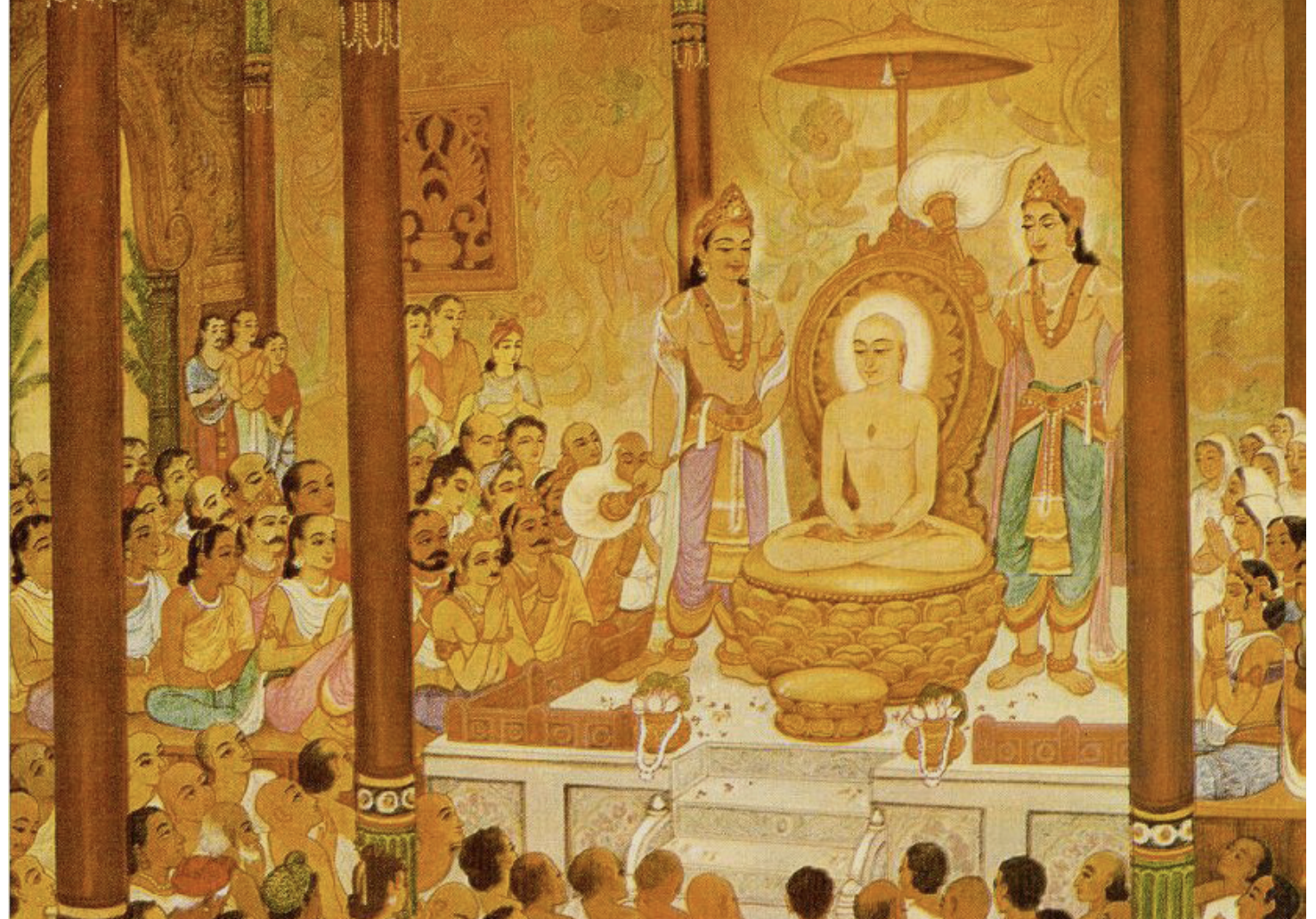
King Sañjaya encounters the monk

अभओ पित्थवा तुभं, अभयदाया भवाहि य

“You have nothing to fear from me — now become a giver of fearlessness to others.”

About This Chapter

Sañjayīya

Sañjayīya — the eighteenth chapter — is one of the most narrative and dramatic chapters of the Uttaradhyayana Sutra. It opens with the story of King Sañjaya of Kāmpilya, a powerful ruler who encounters a meditating monk in the midst of a violent royal hunt.

The chapter unfolds through a profound dialogue on impermanence, karma, and the solitude of the soul at death. It culminates in an extensive enumeration of legendary Cakravartīs and kings who renounced their empires, proving that inner liberation is the only conquest that truly lasts.

Chapter Structure

I The Previous Life of King Sañjaya
II King Sañjaya Encounters the Monk
III The Monk's Teaching to the King
IV The Initiation of King Sañjaya
V The Meeting of Kṣatriyamuni and Sañjayamuni
VI Discussion of Philosophy
VII The Clairvoyant Capacity of Kṣatriyamuni
VIII Sañjayamuni Inspires the Kṣatriyamuni
IX Roll-Call of Great Renunciants
X The Wisdom of the Intelligent Seeker
54 Sutras
King Sañjaya Protagonist
Renunciation Core Theme
Adhyayana 18

The 54 Sutras

Each sutra is presented with the original Prakrit, English translation, and a simplified commentary.

Part I — The Previous Life of King Sañjaya
18.1

कंपिल्ले णयरे राया, उदिण्ण बलवाहणे ।
णामेणं संजए णामं, मिगव्वं उवणिग्गए ॥१८.१॥

In the city of Kāmpilya, the renowned King Sañjaya, endowed with a vast army and many vehicles, went out one day for a hunt.

King Sañjaya was the ruler of Kāmpilya, rich in military might. One day he set out from his city for a hunt, surrounded by the full splendour of his four-fold army. This sets the stage: a man at the peak of worldly power, about to encounter something that will shatter his attachment to all of it.

The simple version: A powerful king named Sañjaya rode out from his grand city one day to go hunting in the forest with his enormous army surrounding him.

Worldly Power Hunting Kāmpilya
18.2

हयाणीए गयाणीए, रहाणीए तहेव य ।
पायत्ताणीए महया, सव्वओ परिवारिए ॥१८.२॥

He was surrounded on all sides by a great cavalry, elephant corps, chariot division, and infantry.

The four-fold army (caturańgī senā) completely encircled the king as he moved toward the hunting ground. This royal grandeur emphasizes his status — he is a man of ultimate earthly security, protected on every side by the might of his kingdom.

The simple version: King Sañjaya went hunting accompanied by thousands of soldiers on horseback, on elephants, in chariots, and on foot — the full might of his kingdom around him.

Royal Pomp Four-Fold Army Security
18.3

मिए छुहित्ता हयगओ, कंपिल्लुज्जाण केसरे ।
भीए संते मिए तत्थ, वहेइ रसमुच्छिए ॥१८.३॥

Riding on horseback, addicted to the taste of flesh, he disturbed and pursued deer in the Keśara garden of Kāmpilya, shooting the frightened and exhausted animals with arrows.

Intoxicated by craving for sensory pleasure, the king drove terrified deer through the royal garden and slaughtered them. The imagery is stark — a man of power hunting the helpless, pleasure-drunk, oblivious to the suffering he causes. This is the state of the soul lost in craving.

The simple version: King Sañjaya, drunk on the pleasure of the hunt, was chasing and killing frightened deer in the royal garden — completely absorbed in craving and violence.

Violence Craving Sensory Addiction
18.4

अह केसरम्मि उज्जाणे, अणगारे तवोधणे ।
सज्झायज्झाण संजुत्ते, धम्मज्झाणं झियायइ ॥१८.४॥

At that very time in the Keśara garden, a houseless ascetic, rich in austerity, absorbed in scriptural study and meditation, was engaged in religious contemplation.

Jain PrincipleDhyana · Meditation

Inward focus purifies the mind and awakens inner wisdom.

In the same garden where violence raged, a monk named Gardabhāli sat in perfect stillness. The contrast is complete: the king in sensory frenzy; the monk in perfect inner silence. Outer conquest versus inner conquest — the text invites us to see which pursuit is truly noble.

The simple version: Right there in the same garden where the king was hunting and killing, a holy monk named Gardabhāli sat completely still and peaceful, deep in meditation.

Stillness Meditation Dharma-Dhyana
18.5

अप्फोवमंडवम्मि, झायइ खवियासवे ।
तस्सागए मिए पासं, वहेइ से णराहिवे ॥१८.५॥

The monk who destroys karmic influx was meditating in a bower of vines and creepers, and beside him the king's arrows drove wounded deer that fled to his side.

The wounded deer fled to the monk's very side — seeking refuge beside the one being in that space who had renounced all harm. The image is powerful: the one who harms drives the victims toward the one who protects.

The simple version: The monk was meditating quietly in a leafy shelter in the garden, and the deer that the king shot and wounded ran and collapsed right next to him.

Refuge Non-Harm Karmic Destruction
Part II — King Sañjaya Encounters the Monk
18.6

अह आसगओ राया, खिप्पमागम्म सो तिहिं ।
हए मिए उ पासित्ता, अणगारं तत्थ पासइ ॥१८.६॥

Then, still mounted on horseback, the king quickly came to that place, saw the deer he had struck, and also saw the monk sitting there in meditation.

Jain PrincipleDhyana · Meditation

Inward focus purifies the mind and awakens inner wisdom.

The king is suddenly confronted with two images at once: the wounded animals he had caused to suffer, and the silent monk in meditation. This double vision — harm done and holiness present — was the first crack in his heart.

The simple version: The king rode quickly to see the deer he had shot, but when he arrived he also saw a monk sitting completely still and peaceful right beside the wounded animals.

Confrontation Holiness Awakening
18.7

अह राया तत्थ संभंतो, अणगारो मणाऽऽहओ ।
मए उ मंदपुण्णेणं, रसगिद्धेण चंतुणा ॥१८.७॥

Seeing this, the king fell into confusion; he thought — "I, the lowly in merit, blinded by craving for taste, a violent one, have needlessly pained the heart of this monk."

The moment of moral awakening begins with confusion. The king sees his own portrait in stark terms: merit-poor, taste-addicted, violent. He feels remorse not as weakness but as the first light of self-knowledge. Transformation begins with honest self-reflection.

The simple version: Seeing the monk, the king felt confused and ashamed — he thought to himself, "What kind of person am I? I have disturbed this holy man's peace just to satisfy my craving for meat."

Remorse Self-Knowledge Confession
18.8

आसं विसज्जित्ताणं, अणगारस्स सो णिवो ।
विणएण वंदए पाए, भगवं एत्थ मे खमे ॥१८.८॥

That king immediately dismounted from his horse and bowed with reverence at the monk's feet, saying: "Blessed One, please forgive me for this transgression."

The king's response is immediate and humble: he dismounts (symbolically stepping down from his height of power) and bows at the monk's feet. This reversal of hierarchy reveals the king's genuine spiritual sensitivity beneath the surface of royal arrogance.

The simple version: The king immediately got off his horse, walked up to the monk, bowed at his feet and said, "Holy man, please forgive me for disturbing you."

Humility Forgiveness Reversal
18.9

अह मोणेण सो भगवं, अणगारे झाणमिस्सिए ।
रायाणं ण पडिमंतेइ, तओ राया भयद्दुओ ॥१८.९॥

But that Blessed monk, absorbed in meditation and observing silence, gave no response to the king; at this the king grew even more fearful.

Jain PrincipleDhyana · Meditation

Inward focus purifies the mind and awakens inner wisdom.

CautionKrodha · Anger

Anger destroys equanimity and generates the most intense karma.

The monk's silence is total inner absorption. Yet the king interprets this silence as danger, thinking the monk must be furious. His fear reveals how deeply worldly power depends on recognition and reaction from others.

The simple version: The monk did not reply at all — he stayed completely still and silent in his meditation. This made the king even more frightened, thinking the monk might be angry with him.

Mauna Absorption Fear
18.10

संजओ अहमम्मीति, भगवं वाहराहि मे ।
कुद्धे तेएण अणगारे, दहेज्ज णरकोडिओ ॥१८.१०॥

The king said: "I am Sañjaya! Blessed One, please speak with me and look at me — for a wrathful ascetic can with his own power reduce millions of people to ashes."

Jain PrincipleTapa · Austerity

Deliberate practice that weakens karma and strengthens the soul.

The frightened king introduces himself by name — a humble act, but driven by fear. He respects the monk's power and fears that the tapasvin's accumulated spiritual energy could be unleashed in destruction. This fear drives him to seek the monk's grace.

The simple version: The scared king said to the monk, "I am King Sañjaya! Please talk to me! I know that a holy person who gets angry can destroy millions of people with their spiritual power."

Tapas-Power Vulnerability Identification
Part III — The Monk's Teaching to the King
18.11

अभओ पित्थवा तुभं, अभयदाया भवाहि य ।
अिणच्चे जीवलोगम्मि, किं हिंसाए पसंजिसि ॥१८.११॥

The monk said: "O king, you have nothing to fear from me — now become a giver of fearlessness to others; why do you remain attached to violence in this impermanent world?"

The monk's first words dissolve fear: "You are safe — now make others safe." This is the essence of abhaya: one who has stopped fearing for himself naturally extends safety to all. He then poses the core question: in an impermanent world, what is the point of violence?

The simple version: The monk finally spoke and said, "You have nothing to fear from me — now go and stop scaring others too. In this temporary world where nothing lasts, why are you addicted to hurting living beings?"

Abhay-Dana Impermanence Questioning Violence
18.12

जया सव्वं परिच्चज्ज, गंतव्वमवसस्स ते ।
अिणच्चे जीवलोगम्मि, किं रज्जम्मि पसंजिसि ॥१८.१२॥

"When, leaving everything behind involuntarily, you must one day depart — why do you remain attached to your kingdom in this impermanent world?"

CautionImpermanence and Death

All worldly things are temporary—clinging to them brings suffering.

The monk presses deeper: death is not a choice; you will be compelled to leave everything (avassa). Knowing this, clinging to the kingdom is not ambition but delusion. The wise person prepares for the inevitable departure rather than pretending it won't come.

The simple version: "One day you will be forced to leave everything behind — your kingdom, your wealth, everything — so why are you so attached to your kingdom in a world where nothing lasts?"

Inevitable Departure Non-attachment Kingdom
18.13

जीविंयं चेव रूवं च, विज्जुसंपाय चंचलं ।
जत्थ तं मुज्झिसि रायं, पेच्चत्थं णावबुज्झसे ॥१८.१३॥

"O king, the life and the form of the body you are attached to flash as briefly as lightning — why do you not contemplate what benefits the next world?"

Life flashing like lightning — this image carries immense force. The very thing you stake your existence upon — this body, this beauty — is as brief as a bolt in the night sky. The monk invites Sañjaya to wisdom: if the time is so short, spend it on what is permanent.

The simple version: "The life you love and the body you're proud of will vanish as quickly as a flash of lightning — so why aren't you thinking about what will actually last beyond your death?"

Briefness Lightning Metaphor Spiritual Urgency
18.14

दाराणि य सुया चेव, मित्ता य तह बंधवा ।
जीवंतमणुजीवंति, मयं णाणुव्वयंति य ॥१८.१४॥

"Wives, sons, friends, and kinsmen follow only the living — none of them accompanies the dead."

CautionImpermanence and Death

All worldly things are temporary—clinging to them brings suffering.

This cuts through the most powerful illusion: that family loves us absolutely. Wives and kinsmen accompany only the living — sharing in wealth and pleasure. When death comes, not one follows. The soul departs alone. This is compassionate clarity, not cynicism.

The simple version: "Your wife, your children, your friends — they are with you while you are alive and useful to them. The moment you die, not one of them can come with you."

Solitude in Death Attachment Family Ties
18.15

णीहरंति मयं पुत्ता, पियरं परमदुक्खिया ।
पियरो वि तहा पुत्ते, बंधू रायं तवं चरे ॥१८.१५॥

"Sons carry out their dead father — weeping with grief; and in the same way fathers carry out their dead sons; O king, therefore practice austerity."

The destination of every beloved relationship is the funeral. Having made this plain, the monk gives a direction: "tavaṃ care" — practice austerity. The teaching of impermanence is always in service of taking action now.

The simple version: "Sons carry their dead father to the cremation ground in tears; fathers do the same for their dead sons. So, O king, knowing this is how it ends — take up the path of self-restraint now."

Cremation Inevitability Call to Tapa
18.16

तओ तेणऽिज्जए दव्वे, दारे य परिरिक्खए ।
कीलंतिऽण्णे णरा रायं, हट्टु तुट्टु-मलंकिया ॥१८.१६॥

"After your death, other men will enjoy the wealth you accumulated and the wife you protected — adorning themselves with ornaments, joyful and delighted."

CautionImpermanence and Death

All worldly things are temporary—clinging to them brings suffering.

This delivers the final indignity of attachment: the wealth and relationships you jealously guarded will be enjoyed by others the moment you die. They will do so with delight, using the jewels you worked to accumulate. Possession is a fundamental pointlessness.

The simple version: "After you die, other men will take and enjoy your wealth and your wife — cheerfully putting on the jewellery you collected — while you are gone."

Pointlessness of Possession Inheritance Futile Guarding
18.17

तेणावि जं कयं कम्मं, सुहं वा जइ वा दुहं ।
कम्मुणा तेण संजुत्तो, गच्छइ उ परं भवं ॥१८.१७॥

"Whatever karma — pleasant or painful — the dead person has performed, with that karma alone they go to the next life, completely alone."

The spiritual law: you cannot take wealth or fame — only karma accompanies you. This is a navigational truth. If you go alone with your karma, the wisest investment is in the quality of your actions — ahiṃsā and samyam — the only currency of value in the journey ahead.

The simple version: "When you die, the only thing that travels with you to the next life is the karma — the good and bad actions — that you have built up. Nothing else. No one else."

Karma as Luggage Individual Responsibility Alone
Part IV — The Initiation of King Sañjaya
18.18

सोऊण तस्स सो धम्मं, अणगारस्स अंतिए ।
महया संवेग णिव्वेयं, समावण्णो णराहिवो ॥१८.१८॥

Having heard this dharma from the monk, the king was seized by a great saṃvega (spiritual urgency) and nirveda (detachment from the world) right then and there.

Jain PrincipleMoksha · Liberation

Freedom from karma and rebirth is the soul's eternal home.

CautionSamsara · Worldly Existence

Involvement in worldly activities generates binding karma.

Saṃvega is the awakening of the soul's deepest longing for liberation. Nirveda is the recognition that worldly pleasures cannot satisfy the soul. These arise together in Sañjaya, like two flames lit by a single spark. Seven verses of teaching transformed a hunter-king.

The simple version: After hearing the monk's teachings, King Sañjaya was instantly filled with a deep longing for liberation and a profound detachment from worldly life — his whole inner world shifted.

Saṃvega Nirveda Instant Transformation
18.19

संजओ चइउं रज्जं, णिक्खंतो जिणसासणे ।
गद्दभालिस्स भगवओ, अणगारस्स अंतिए ॥१८.१९॥

Abandoning his kingdom, Sañjaya was initiated into the Jina's path in the presence of the Blessed Monk Gardabhāli.

The transformation is complete. Sañjaya does not delay. He takes dīkṣā from the very monk whose peace he disrupted as a hunter. The destroyer becomes a protector of all living beings. This is the supreme reversal that dharma makes possible.

The simple version: Sañjaya gave up his entire kingdom on the spot and was initiated as a monk by the very holy man he had come to the garden intending to ignore.

Diksha Gardabhāli Renouncing the Kingdom
Part V — The Meeting of Kṣatriyamuni and Sañjayamuni
18.20

चिच्चा रट्टुं पव्वइए, खत्तिए परिभासइ ।
जहा ते दीसइ रूवं, पसण्णं ते तहा मणो ॥१८.२०॥

A Kṣatriya monk who had renounced his kingdom and been initiated addressed Sañjaya: "As your outward form appears pure and calm, so too does your heart appear serene and pure."

Another monk who had renounced a kingdom recognizes something extraordinary: an outer purity mirroring inner purity. The state of the soul manifests in the body's radiance. His greeting is a teaching: outer and inner are not separate.

The simple version: Another monk who had also given up a kingdom met Sañjayamuni and said, "Your face looks as peaceful and pure as your heart clearly is."

Inner Serenity Radiance Recognition
18.21

किं णामे किं गोत्ते, कस्सट्टाए व माहणे ।
कहं पडियरिस बुद्धे, कहं विणीए ति वुच्चिसि ॥१८.२१॥

"What is your name? What is your clan? Why did you become an ahiṃsic monk? How do you serve your teacher? And why are you called disciplined?"

Jain PrincipleTyaga · Renunciation

Voluntarily releasing worldly attachments leads to spiritual freedom.

The monk poses five questions — a traditional inquiry into identity, purpose, discipleship, and conduct. These are an invitation for Sañjaya to articulate the ground of his renunciation, helping him become clearer about his chosen path.

The simple version: The other monk asked Sañjaya five questions: "What's your name? What's your family? Why did you become a monk? How do you serve your teacher? And why are you considered a disciplined person?"

Inquiry Discipleship Purpose
18.22

संजओ णाम णामेणं, तहा गोत्तेण गोयमो ।
गद्दभाली ममायरिया, विज्जा चरण पारगा ॥१८.२२॥

"My name is Sañjaya; my clan is Gautama; and Gardabhāli — who has mastered both knowledge and conduct — is my teacher."

Sañjaya's reply emphasizes what he values: a teacher who has perfected both jñāna (knowledge) and cāritra (conduct). This integration is the conception of the complete spiritual guide.

The simple version: Sañjaya answered, "My name is Sañjaya, my family name is Gautama, and my teacher is the great Gardabhāli — a monk who has mastered both learning and righteous living."

Gautama Clan Vijjā-Caraṇa Teacher
Part VI — Discussion of Philosophy
18.23

किरियं अिकिरियं विणयं, अण्णाणं च महामुणी ।
एएहिं चउहिं ठाणेहिं, मेयण्णे किं पभासइ ॥१८.२३॥

"O great monk — through these four views: kriyāvāda, akriyāvāda, vinayavāda, and ajñānavāda — what do the knowers of reality truly proclaim?"

A profound philosophical question: among competing one-sided views (karma exists, karma doesn't, only reverence matters, we can't know), what does the truly wise one teach? The monk answers this by tracing it back to the Jina.

The simple version: The Kṣatriya monk asked, "Among the four major schools of philosophy — those who believe in karma, those who deny karma, those who say just be respectful, and those who say we can't know anything — what does the truly wise one teach?"

Four Views Kriyāvāda Agnosticism
18.24

इइ पाउकरे बुद्धे, णायए परिणिव्वुडे ।
विज्जाचरण संपण्णे, सच्चे सच्चपरक्कमे ॥१८.२४॥

"Thus has proclaimed the Enlightened One — the knower (Mahāvīra), who has attained full quiescence, who is perfected in knowledge and conduct, truthful, and heroic in truth."

Jain PrinciplePrajna · Wisdom

Direct insight into reality transcends mere intellectual knowledge.

The monk attributes the teaching to Bhagavān Mahāvīra — the omniscient Tīrthaṅkara. This is the tradition of paramparā: wisdom flows from the liberated ones. The description of Mahāvīra here is itself a compressed mantra.

The simple version: "This teaching comes from Bhagavān Mahāvīra himself — the fully enlightened one who conquered all inner passions, mastered both knowledge and right living, and always spoke the absolute truth."

Mahāvīra Lineage Sacca-Parakkama
18.25

पडंति णरए घोरे, जे णरा पावकारिणो ।
दिव्वं च गइ गच्छंति, चरित्ता धम्मारियं ॥१८.२५॥

"Those who commit evil fall into the terrible hell; those who practice the noble Ārya dharma attain the divine destination."

Jain PrincipleMoksha · Liberation

Freedom from karma and rebirth is the soul's eternal home.

The direct answer to competing views: action determines outcome. Evil action leads to hell; noble action leads to liberation. This is not a position but an observation of the soul's journey. Action determines destination.

The simple version: "Those who live harmfully fall into terrible lower existences; those who live by the noble teachings of the Tīrthaṅkaras reach divine or liberated states — it really is that direct."

Consequence Action Dharma-Caritra
18.26

मायाबुइयमेयं तु, मुसाभासा णिरत्थिया ।
संजयमाणो वि अहं, वसामि इरियामि य ॥१८.२६॥

"The doctrines of the one-sided views — spoken deceitfully — are false speech, empty and purposeless; knowing this, I remain stable in restraint and walk with mindfulness."

Knowing one-sided doctrines to be word-play, the monk anchors himself in the living practice of restraint and mindfulness (iriyāmi). Philosophy is made real through the precision of daily practice and careful movement.

The simple version: "The teachings of those one-sided schools are just empty words and clever deception. Knowing this, I keep my mind steadily on the path of self-restraint and move through the world with care and attention."

Mindful Walking False Doctrines Practice over Theory
18.27

सव्वे ए वेइया मज्झं, मिच्छादिट्ठि अणारिया ।
विज्जमाणे परे लोए, सम्मं जाणामि अप्पयं ॥१८.२७॥

"All these debaters are known to me — they are of wrong view and ignoble; the next world truly exists, and I know my own self correctly — as well as the souls dwelling there."

The monk speaks with the authority of avadhi-jñāna (clairvoyance). He has verified: one-sided debaters are mistaken; the next world is real; his own soul is knowable. This is experiential testimony, not inference.

The simple version: "I know all these philosophical debaters — they are all mistaken and lead people away from truth. The next life is real, and I can directly see the truth of my own soul and other souls beyond."

Direct Knowledge Clairvoyance Samyag-Darsana
Part VII — The Clairvoyant Capacity of Kṣatriyamuni
18.28

अहमासी महापाणे, जुइमं विरस सओवमे ।
जा सा पाली महापाली, दिव्वा विरस सओवमा ॥१८.२८॥

"I was previously a radiant deva in the Mahāprāṇa celestial realm — a realm whose divine lifespan is measured in sāgaropamas, just as here one hundred years is the standard measure."

The monk reveals his past life as testimony: "I know the next world is real because I have been there." He was a deva in the fifth heaven with a lifespan measured in sāgaropamas — vast, incomprehensible stretches of time.

The simple version: "I was previously a glowing divine being in the fifth heaven, where the lifespan is measured in unimaginably long units of time — I know these things because I lived them."

Past Life Deva-Loka Sāgaropama
18.29

से चुए बंभलोगाओ, माणुस्सं भवमागओ ।
अप्पणो य परेसिं च, आउं जाणे जहा तहा ॥१८.२९॥

"Having descended from Brahmaloka after completing ten sāgaropamas of divine life, I have come to the human realm — and I know the lifespan of my own soul and of others exactly as it is."

Descending from Brahmaloka, the monk retains the capacity to know the lifespans of beings exactly. His authority comes from directly experienced cosmic perspective. He has seen both worlds from within.

The simple version: "After completing an enormous amount of time as a heavenly being, I came down into this human birth — and I can directly know the lifespan of my own soul and other souls."

Incarnation Human Birth Avadhi-Jnana
Part VIII — Sañjayamuni Inspires the Kṣatriyamuni
18.30

णाणारुइं च, छंदं च, परिवज्जेज्ज संजए ।
अणट्टा जे य सव्वत्था, इइ विज्जामणुसंचरे ॥१८.३०॥

"O Sañjaya, a restrained monk should shun the diverse inclinations and self-willed opinions (of the sectarians), and completely abandon all harmful actions — thus knowing, one should walk rightly in the path of restraint."

Jain PrinciplePrajna · Wisdom

Direct insight into reality transcends mere intellectual knowledge.

Wisdom flows in both directions. Sañjayamuni identifies three obstacles: doctrinal obsessions, self-willed opinions, and harmful actions. The path requires dropping all three completely to remain unentangled in sin.

The simple version: "O Sañjaya, a true monk must stay away from the obsessions of different sects, the trap of his own stubborn opinions, and all harmful actions — knowing this, walk steadily on the path of restraint."

Right Walking Self-Will Non-Harm
18.31

पडिक्कमामि पिसाणाणं, परमंतेहिं वा पुणो ।
अहो उट्टिए अहोरायं, इइ विज्जा तवं चरे ॥१८.३१॥

"I have withdrawn from interpreting omens and from discussions about householder affairs — remaining ever-alert day and night; knowing this, the wise monk should practice austerity and restraint."

Jain PrincipleMoksha · Liberation

Freedom from karma and rebirth is the soul's eternal home.

CautionSamsara · Worldly Existence

Involvement in worldly activities generates binding karma.

Sañjayamuni describes his own practice: total withdrawal from worldly entanglement like fortune-telling or householder advice. A monk's role is to be a beacon of liberation, not a worldly consultant. Day and night are devoted to dharma.

The simple version: "I have completely stopped giving predictions about good or bad omens and stopped giving advice on worldly affairs — day and night I stay focused on my spiritual practice. You should do the same."

Non-Interference Alertness Monastic Role
18.32

जं च मे पुच्छिस काले, सम्मं सुद्धेण चेयसा ।
ताइं पाउकरे बुद्धे, तं णाणं जिणसासणे ॥१८.३२॥

"Whatever you ask me at any time, with a pure and correct mind — I can answer completely, because all this knowledge has been proclaimed by the Omniscient One and exists in the Jina's teaching."

Confidence in the Jina's teaching: if you ask with sincerity (suddheṇa ceyasā), the answer flows. The Jina's teaching is a complete knowledge-system, not a partial map. Truth reveals itself to the pure-minded seeker.

The simple version: "If you ever ask me anything sincerely and with a pure heart, I can give you a complete answer — because all such knowledge already exists in the Jina's teaching."

Sincerity Completeness Jina-Sāsana
18.33

किरियं च रोयए धीरे, अिकिरियं परिवज्जए ।
दिट्टिए दिट्टिसंपण्णे, धम्मं चर सुदुच्चरं ॥१८.३३॥

"A steadfast one trusts in kriyā (the reality of karma and action) and renounces akriyā (nihilism); attaining right vision, O Sañjaya, practice this most difficult of dharmas with firm resolution."

Trust in the reality of karma, reject nihilism, achieve right vision, and then practice the highest dharma — complete restraint. Only the steadfast (dhīre) walk this hard path to its end with unwavering determination.

The simple version: "A truly brave person believes in the reality of karma and action, rejects all nihilism, gains right inner vision, and then practices the very difficult path of complete self-restraint with unwavering determination."

Steadfastness Right Vision Resolution
Part IX — Roll-Call of Great Renunciants
18.34

भरहो वि भारहं वासं, चिच्चा कामाइ पव्वए ॥१८.३४॥

"Hearing this teaching, even Bharat Cakravartī renounced the kingdom of Bhārata and all pleasures and was initiated."

Jain PrincipleTyaga · Renunciation

Voluntarily releasing worldly attachments leads to spiritual freedom.

Bharat was the first emperor of all Bhārata. His mirror-moment — seeing a jewel fall and realizing beauty's impermanence — led to his total renunciation. He attained kevala-jñāna.

The simple version: "Even the great Emperor Bharat — who ruled the entire country — gave up his kingdom and all its pleasures and took the path of an ascetic."

Bharat Cakravartī Emperor-Monk
18.35

सगरो वि सागरंतं,Issiriyaṃ kevalaṃ hiccā, दयाए परिणिव्वुडे ॥१८.३५॥

"Sagar, the second Cakravartī, abandoning all his sovereignty entirely, attained nirvāṇa through compassion."

Jain PrincipleMoksha · Liberation

Freedom from karma and rebirth is the soul's eternal home.

Sagar ruled an empire bounded by three oceans. His means of liberation was "dayāe" — compassion and restraint. Liberation is won through the practice of universal non-harm.

The simple version: "Emperor Sagar, who ruled an ocean-bounded empire, gave up all his power and wealth completely and attained liberation through compassion."

Sagar Compassion Nirvana
18.36

मघवं णाम महाजसो ॥१८.३६॥

"The third Cakravartī named Maghvā abandoned the realm of Bhārata and embraced renunciation."

Jain PrincipleTyaga · Renunciation

Voluntarily releasing worldly attachments leads to spiritual freedom.

Maghvā conquered all six divisions of Bhārata before reflecting that wealth and body are as fleeting as lightning. He entrusted his kingdom to his son and sought the path.

The simple version: "Maghvā, the glorious third Emperor of Bhārata, gave up his enormous empire and took the ascetic path."

Maghvā Renunciation Dispassion
18.37

सणंकुमारो मणुस्सिंदो... सो वि राया तवं चरे ॥१८.३७॥

"Sanatkumāra, the fourth Cakravartī, placed his son on the throne and practiced austerity."

Jain PrincipleSamata · Equanimity

Equal-mindedness in pleasure and pain reveals the soul's true nature.

Sanatkumāra was Indra among men. He endured 700 diseases during his austerities with complete equanimity, saying: "I am curing karma-disease — and that only I can do."

The simple version: "Sanatkumāra, the fourth Emperor, placed his son on the throne and took up a life of austerity — enduring incredible suffering without giving up."

Sanatkumāra Austerity Equanimity
18.38

संती संतिकरे लोए, पत्तो गइमणुत्तरं ॥१८.३८॥

"Śāntinātha — peacemaker of the world — attained the supreme destination through restraint."

Śāntinātha was both the fifth Cakravartī and sixteenth Tīrthaṅkara. He ruled Bhārata for 25,000 years before attaining mokṣa. He truly embodied his name: he was peace itself.

The simple version: "Śāntinātha — who was both a great emperor and a Tīrthaṅkara — abandoned his kingdom and reached the highest possible liberation."

Śāntinātha Tīrthaṅkara Peace
18.39

कुंथु णाम णरीसरो... पत्तो गइमणुत्तरं ॥१८.३९॥

"Kunthunātha — lord of kings — accepting initiation, attained the supreme destination."

Kunthunātha was the sixth Cakravartī and seventeenth Tīrthaṅkara. He conquered Bhārata's six divisions and then renounced it all to attain kevala-jñāna and mokṣa.

The simple version: "Kunthunātha — both a great emperor and a Tīrthaṅkara — gave up his empire and reached full liberation."

Kunthunātha Ikṣvāku Liberation
18.40

अरो य अरयं पत्तो, पत्तो गइमणुत्तरं ॥१८.४०॥

"Ara — the seventh Cakravartī — attained the state free from karmic dust and reached the supreme destination."

Aranātha was the eighteenth Tīrthaṅkara. He is described as having attained "arayaṃ" — the state free from the dust of karma. He completed 84,000 years before attaining siddhi.

The simple version: "The great seventh Emperor Aranātha gave up his ocean-bounded empire, purified himself of all karma, and reached the highest liberation."

Aranātha Dust-Free Siddhi
18.41

महापउमे तवं चरे ॥१८.४१॥

"Mahāpadma — the ninth Cakravartī — practiced austerity and restraint and attained liberation."

Jain PrincipleMoksha · Liberation

Freedom from karma and rebirth is the soul's eternal home.

Mahāpadma renounced the finest pleasures for a 10,000-year practice of complete austerity. His story is one of the richest, showing patient conduct through all crises.

The simple version: "Mahāpadma, the ninth Emperor, gave up the entire realm of Bhārata and reached full liberation through the path of austerity."

Mahāpadma Austerity Patience
18.42

हरिसेणो मणुस्सिंदो, पत्तो गइमणुत्तरं ॥१८.४२॥

"Hariṣeṇa established a single-canopied rule over the earth, then abandoned it and attained supreme liberation."

Jain PrincipleMoksha · Liberation

Freedom from karma and rebirth is the soul's eternal home.

Hariṣeṇa was from Kāmpilya — connecting him to Sañjaya. He unified all of Bhārata under one canopy, then in awakening renounced all power to attain kevalajñāna and mokṣa.

The simple version: "Hariṣeṇa — who unified the whole world under his rule — gave everything up and attained the highest liberation."

Hariṣeṇa Unified Rule Awakening
18.43

जयणामो जिणक्खायं, पत्तो गइमणुत्तरं ॥१८.४३॥

"Jay renounced royal opulence along with a thousand kings and attained the supreme destination."

Jain PrincipleTyaga · Renunciation

Voluntarily releasing worldly attachments leads to spiritual freedom.

Jay's renunciation was a collective act: he led an entire court of a thousand kings into dīkṣā. Collective renunciation can transform an entire world.

The simple version: "Emperor Jay renounced his kingdom together with a thousand other kings — and all of them attained the highest liberation."

Jay Mass Renunciation Jina-Restraint
18.44

दसण्णभद्दो णिक्खंतो, सक्खं सक्केण चोइओ ॥१८.४४॥

"Daśāṇabhad — directly inspired by Indra himself — abandoned his kingdom and walked the monk's path."

CautionMana · Pride

Arrogance blocks the humility needed for genuine learning.

Indra cured the king's subtle pride by manifesting 64,000 divine elephants. The king turned inward: "How trivial is my pomp compared to dharma?" He sought dīkṣā from Mahāvīra.

The simple version: "When Indra showed King Daśāṇabhad true greatness, the king immediately gave up his kingdom and became a monk under Bhagavān Mahāvīra."

Daśāṇabhad Indra Curing Pride
18.45

णमी णमेइ अप्पाणं... सामण्णे पज्जुवट्टिओ ॥१८.४५॥

"Nimi disciplined his soul in restraint, abandoned his home, and established himself in the śramaṇa-path."

Jain PrincipleVinaya · Discipline

Self-imposed order of thought, word, and deed transforms the soul.

Nimi "bowed his own soul" (ṇamei appāṇaṃ) — a beautiful act of full surrender. He was unmoved by Indra's arguments and established himself in saṃyama-bhāva.

The simple version: "Nimi completely surrendered himself to the monk's path, giving up his home and kingdom and entering fully into the life of a śramaṇa."

Nimi Surrender Śramaṇa
18.46

करकंडु किलिंगेसु, पंचालेसु य दुम्मुहो ।
णमी राया विदेहेसु, गंधारेसु य णग्गई ॥१८.४६॥

"Karakandu in Kaliṅga, Dvimukha in Pāñcāla, King Nimi in Videha, and Naggati in Gandhāra."

These four are the celebrated Pratyekabuddhas — souls who achieved awakening independently through direct experience. Their stories are among the most vivid in the tradition.

The simple version: "Four great kings — Karakaṃḍu, Dvimukha, Nimi, and Naggati — each attained awakening independently in their own kingdoms."

Pratyekabuddhas Independent Awakening Four Kings
18.47

एए णरिंदवसभा... सामण्णे पज्जुवट्टिया ॥१८.४७॥

"These bull-like lords of men established themselves fully in the śramaṇa-path and became absorbed in it."

Jain PrincipleTyaga · Renunciation

Voluntarily releasing worldly attachments leads to spiritual freedom.

"Bull-like" combines royal nobility with the strength of a bull. These kings formally installed their sons as successors before entering the path of total renunciation. The transition was orderly and irreversible.

The simple version: "These four noble kings handed their kingdoms to their sons properly, then gave themselves completely to the life of a śramaṇa monk."

Orderly Transition Responsibility Absorption
18.48

उदायणो पव्वइओ, पत्तो गइमणुत्तरं ॥१८.४८॥

"Udāyana — bull-like king of Sauveera — was initiated, practiced the monk's path, and attained supreme liberation."

Jain PrincipleMoksha · Liberation

Freedom from karma and rebirth is the soul's eternal home.

Udāyana was known for his depth of character. Even when enemies tried to poison him during initiation, he remained steadfast. Karma cannot be stopped by poison when the soul is anchored in liberation.

The simple version: "Udāyana, the powerful king of Sindhu-Sauveera, became a monk and reached the highest liberation through unwavering practice."

Udāyana Sauveera Anchor
18.49

पहणे कम्ममहावणं ॥१८.४९॥

"Baldev Nandan of Kāśī burned down the great forest of karma and attained liberation."

Jain PrincipleMoksha · Liberation

Freedom from karma and rebirth is the soul's eternal home.

Karma accumulation is compared to a vast, ancient forest. The fire of saṃyama (restraint) burns it completely. Nandan renounced his pleasures and became free at age 56,000.

The simple version: "Nandan, the king of Kāśī, burned away his entire forest of accumulated karma through truth and restraint, and became free."

Nandan Forest of Karma Purification
18.50

विजओ राया... रज्जं तु गुणसिमद्धं, पयहितु महाजसो ॥१८.५०॥

"The glorious King Vijaya, abandoning his virtue-rich kingdom, was initiated into the ascetic path."

Jain PrincipleTyaga · Renunciation

Voluntarily releasing worldly attachments leads to spiritual freedom.

Vijaya was the second Baldev. He practiced complete renunciation, attained kevalajñāna, and was liberated after 75 lakh years. Renouncing even a "virtue-rich" kingdom is a remarkable act.

The simple version: "King Vijaya gave up his wonderful, virtue-filled kingdom and took the path of renunciation."

Vijaya Virtue-Rich Immortal Renown
18.51

महब्बलो रायरिसी, आदाय सिरसा सिरिं ॥१८.५१॥

"Mahābal the royal sage surrendered his ego and received the supreme crown of liberation."

Jain PrincipleMoksha · Liberation

Freedom from karma and rebirth is the soul's eternal home.

"Sirasā siriṃ" means receiving the crown of kevalajñāna with humility — the head bowed. Mahābal renounced his marriage to eight royal daughters to practice fierce austerity for 12 years.

The simple version: "Royal sage Mahābal practiced intense austerity and by surrendering his ego entirely, he received the highest crown of liberation."

Mahābal Surrender of Ego One-Pointed Mind
Part X — The Wisdom of the Intelligent Seeker
18.52

कहं धीरो अहेऊहिं, उम्मत्तो व्व महिं चरे ।
एए विसेससमादाय, सूरा दढपरक्कमा ॥१८.५२॥

"How could a steadfast person wander the earth like a madman, led by false reasoning? These heroic and resolute ones saw the greatness of the Jina's teaching — and accepted it."

The conclusion arrives: a truly wise person (dhīro) cannot be led by false logic into a madman's wandering. All these historical heroes saw the distinctive excellence of the Jina's path and chose it firmly.

The simple version: "How could a truly intelligent person let false logic lead them around like a madman? All these great heroes saw the unique power of the Jina's teaching clearly — and chose it firmly."

Distinctive Excellence Firm Resolve Great Heroes
18.53

अच्चंत णियाणखमा, सच्चा मे भासिया वई ।
अतिरिंसु तरंतेगे, तिरिस्संति अणागया ॥१८.५३॥

"The words I have spoken are supremely capable of purifying karma and are the complete truth — by them countless beings have crossed the ocean of saṃsāra in the past, are crossing now, and will cross in the future."

Jain PrinciplePrajna · Wisdom

Direct insight into reality transcends mere intellectual knowledge.

The teaching is "accaṃta ṇiyāṇakhamā" — functionally powerful at purifying the soul. It is the living stream of wisdom that has liberated countless beings across all of time.

The simple version: "What I have shared with you is the complete truth — supremely powerful for freeing the soul. Countless beings in the past, present, and future cross the ocean of suffering through these very words."

Ocean of Samsara Eternal Truth Purification
18.54

कहं धीरे अहेऊहिं, अत्ताणं परियावसे ।
सव्वसंग विणिम्मुक्के, सिद्धे हवइ णीरए ॥१८.५४॥
— ति बेमि ।

"How could a wise person dwell with their soul in the company of false arguments? The one who is freed from all attachments, having destroyed all karma, becomes a Siddha — liberated and karma-free." Thus I declare.

CautionSanga · Attachment

Emotional bonds to people and things perpetuate suffering.

The journey from hunter-king Sañjaya to the Siddha-state is complete. Freed from all attachments and all karma, the soul becomes a Siddha. "Iti bemi" is the seal of the Tīrthaṅkara's voice.

The simple version: "Why would a truly wise person allow their soul to be trapped among false arguments? The one who frees themselves from all attachments and destroys all karma becomes fully liberated — a Siddha."

Siddha Karma-Free Final Declaration
॥ अध्ययन-१८ सम्पूर्ण ॥

End of Chapter 18 — Sañjayīya

← Ch 17 Ch 19 →