Uttaradhyayana Sutra · Chapter 17

The Fallen Monk (पापश्रमणीय)

Chapter 17 — On the Marks of Lapsed Conduct and the Path to True Monkhood

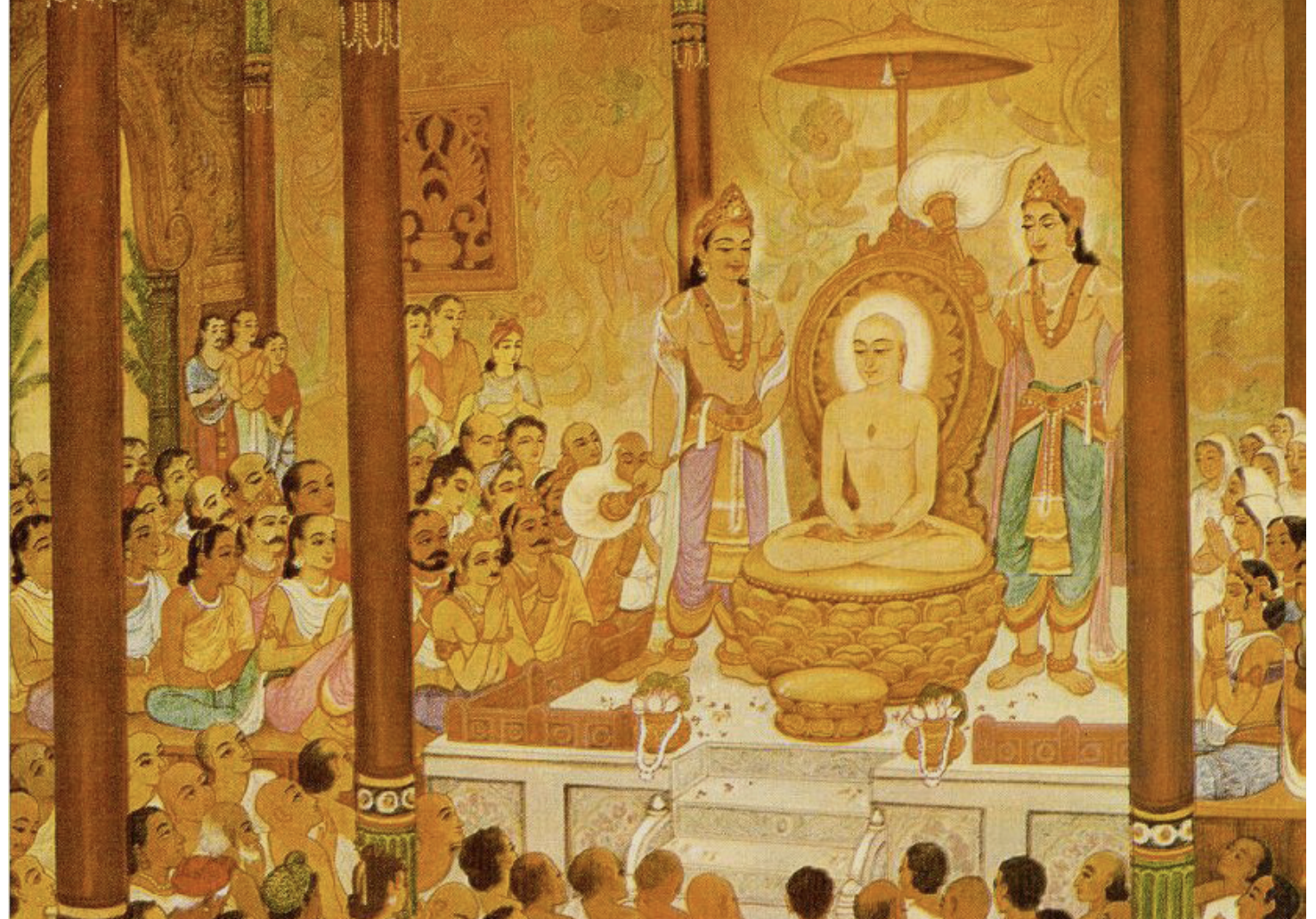
Lord Mahavira teaching

जे वज्जए एए सया उ दोसे, से सुव्वए होइ मुणीण मज्झे

“A monk who forever abandons all these faults becomes the most excellent among monks, adorned with noble vows.”

About This Chapter

Pāpasramaṇīya

Pāpasramaṇīya — the seventeenth chapter of the Uttaradhyayana Sutra — serves as a rigorous manual of spiritual integrity. It narrates the marks of a 'fallen' monk who wears the outward form of renunciation but lacks the inner discipline of a true śramaṇa.

The chapter systematically exposes the self-deceptions of a lapsed practitioner across ten domains of monastic life. It concludes with a powerful vision of the 'Suvihat Shramana' — the virtuous monk whose conduct becomes nectar for the world.

Chapter Structure

I Knowledge (1–3)
II Vinay/Reverence (4–5)
III Irya-Samiti (6–8)
IV Pratilekhana (9–10)
V Kashaya-Emotions (11–12)
VI Seat and Sleep (13–14)
VII Careless Eating (15–16)
VIII Unstable Mind (17)
IX Misconduct (18–19)
X The Future and the Virtuous (20–21)
21 Sutras
Assembly of Seekers Addressed To
10 Sections
Adhyayana 17

The 21 Sutras

Each sutra is presented with the original Prakrit, English translation, and a sectionized commentary.

Part I — Knowledge (1–3)
17.1

जे केइ उ पव्वइए णियंठे, धम्मं सुणित्ता विणओववण्णे ।
सुदुल्लहं लहिंड बोहिलाभं, विहरेञ्ज पच्छा य जहासुहं तु ॥१७.१॥

Having heard the dharma and become endowed with the vinay of knowledge, vision, and conduct — having obtained the extremely rare benefit of spiritual awakening — one who takes initiation as a nirgrantha yet afterward wanders entirely as he pleases is called a pāpasramaṇa.

The chapter opens by identifying the most fundamental failure of all: receiving the rarest spiritual gift and then wasting it. The practitioner described here has received the dharma (heard the teaching), received vinay (disciplined himself in knowledge, vision, and right conduct), and has formally been initiated as a nirgrantha — one free of all knots and attachments. These are profound spiritual attainments, not casual ones. Initiation as a nirgrantha is not like joining a club — it is a complete, formal renunciation of the householder's world, witnessed by the community. And then — "afterward wanders entirely as he pleases" (paccā ya jahāsuhaṃ tu). The phrase is devastating in its precision: "jahāsuhaṃ" means "as comfort dictates" — he lives by whatever feels pleasant or easy rather than by the discipline of the path. He has the form of renunciation but retains the heart of a householder: always looking for the easier option, always choosing rest over practice, always letting comfort be the deciding factor. The tragedy is that the pāpasramaṇa often does not recognize himself as failing. He still wears the robes. He still recites the prayers. He has simply quietly replaced the dharma with his own convenience.

The Gujarati commentary emphasizes the word sudullaha (extremely rare): bodhi-lābha — the attainment of genuine spiritual awakening and the capacity for liberation — is not given to every soul in every birth. Across countless rebirths in the cycle of samsāra, only the rarest alignment of karma, human birth, and contact with the right teacher makes this possible. Think of it like winning a lottery you didn't know existed, then spending the prize on nothing of lasting value. To receive the most extraordinary opportunity a soul can encounter and then squander it by self-willed wandering is the first and deepest mark of a pāpasramaṇa. It is not moral failure in the ordinary sense — it is a cosmic squandering of the rarest of opportunities. And crucially, the soul who wastes this opportunity must wait through more rebirths, more suffering, more cycles of samsāra before the rare alignment comes again. [VISUAL FLAG #17.1 — A split-screen visual: one side showing the outward robes of a monk, the other showing a heart filled with images of a comfortable home, illustrating the 'heart of a householder']

The simple version: If someone receives the rarest gift — a genuine taste of the spiritual path — and takes vows, but then just lives however feels comfortable rather than following the discipline, they are a fallen monk.

Self-Will Rare Awakening Integrity
17.2

सेज्जा दढा पाउरणं मे अत्थि, उप्पज्जइ भोतुं तहेव पाउं ।
जाणामि जं वट्टइ आउसु ति, किं णाम काहामि सुएण भंते ॥१७.२॥

“O venerable Gurudev! I have a secure place to rest, I have clothing to cover myself, food and drink are available — I know what is happening right now; so what exactly will I gain by studying scripture?”

This sutra gives the pāpasramaṇa's own voice — and the voice is instantly recognizable to any student or practitioner who has ever avoided study by finding reasons why it wasn't necessary right now. He rationalizes his neglect of scripture-study with material comforts: shelter is secured (“seyā daḍhā” — my sleeping place is firm), clothing covers him (“pāuraṇaṃ me atthi”), food and drink are available whenever needed. He uses this comfort as a reason to stop learning. The logic is: I have what I need for survival, so what does studying scripture add? This is the voice of someone who has confused the minimum requirements for physical survival with the requirements for spiritual development. Having a roof and food means you won't die today. It says absolutely nothing about whether your soul is moving toward liberation or away from it.

The phrase “I know what is going on right now” (jāṇāmi jaṃ vaṭṭai āusu ti) reveals his deeper and more serious error: he believes present sensory awareness of his immediate situation is sufficient knowledge, and that scripture-study adds nothing he doesn't already have through direct experience. This confusion between worldly awareness and liberative wisdom is at the heart of the pāpasramaṇa's problem. He has mistaken information about his daily life for the kind of transformative knowledge that scripture transmits. This distinction is crucial: knowing what is happening around you right now is ordinary awareness, available to everyone. Knowing the nature of karma, the mechanics of bondage and liberation, the subtleties of the passions — this is the specialized wisdom that only scripture-study can provide. This is not humility but arrogance: the arrogance of the intellectually comfortable monk who has confused “knowing enough to get by” with “knowing what is needed for liberation.” The two are completely different territories, and mistaking one for the other is a very dangerous error. [VISUAL FLAG #17.2 — A monk sitting on a soft cushion with plenty of food, pushing away a stack of sacred scripts with a dismissive hand gesture]

The simple version: A fallen monk thinks, “I have food, shelter, and clothing — I'm comfortable, so why bother studying more? I know enough,” and uses comfort as an excuse to stop growing.

Intellectual Arrogance Comfort Learning
17.3

जे केइ उ पव्वइए, णिद्धासीले पगामसो ।
भोच्चा पेच्चा सुहं सुवइ, पावसमणे ति सुच्चइ ॥१७.३॥

Whoever, having taken initiation, becomes excessively sleep-indulgent — eating and drinking and then sleeping comfortably — is said to be a pāpasramaṇa.

Sleep is not wrong for a monk in moderation — the Jain texts explicitly allow monks adequate rest for health and continued practice. But there is a qualitative difference between rest taken to sustain spiritual practice and rest taken as the primary pleasure of the day. A monk who sleeps six hours to recover from meditation and get up fresh for the next session of practice is doing something completely different from a monk who meditates halfheartedly so he can reach the next sleep sooner. When eating and sleeping comfortably become the routine around which a monk organizes his day, the entire orientation of monastic life is reversed. The monk's life was meant to be organized around study, meditation, austerity, and service. When these become secondary to the comfort of a good meal and a peaceful sleep, the whole structure collapses inward.

The word niddhāsīle (sleep-addicted, one whose character is organized around sleep) is precisely chosen: it refers not to a monk who occasionally sleeps more than intended, but to one for whom comfort-seeking in eating and rest has become the defining character trait — the pole around which his entire day revolves. Life is no longer organized around practice; practice has become an inconvenient interruption to the real business of eating and sleeping comfortably. Ask: what does this monk look forward to in a given day? If the answer is his next meal and his next sleep — not his next meditation session, not his study, not his encounter with dharma — then the pāpasramaṇa portrait fits. He has kept the robes but abandoned the inner architecture of the monastic life. The outer form remains; the inner substance has quietly departed.

The simple version: A fallen monk has basically turned into someone who just eats, drinks, and sleeps comfortably — keeping the robes but ignoring the actual work of spiritual practice.

Indulgence Sleep Practice
Part II — Vinay/Reverence (4–5)
17.4

आयिरय उवज्झाएहिं, सुयं विणयं च गाहिए ।
ते चेव खिंसइ बाले, पावसमणे ति सुच्चइ ॥१७.४॥

One who has received scriptural knowledge and vinay from acharya and upadhyaya, yet slanders those very teachers — that fool is said to be a pāpasramaṇa.

Vinay — deep reverential conduct toward one's ācārya (head teacher) and upādhyāya (scriptural teacher) — is considered the very root of the spiritual path in Jain monasticism. The Daśavaikālika Sūtra states that without vinay, no spiritual progress is possible, because arrogance is the fundamental obstruction to learning. A person who is arrogant cannot truly hear what they are being taught, because they are always filtering it through the assumption that they already know. This sutra describes vinay's precise violation: the monk received scriptural knowledge (suya) and the discipline of conduct (viṇaya) directly from his ācārya and upādhyāya — these were gifts of formation, not just information — and then turns to slander those very people. Slandering the teacher is a particularly strange choice: you are essentially using the words the teacher gave you to attack the person who gave them to you.

To slander the very source of one's spiritual formation is not merely ingratitude; it is evidence that nothing was truly absorbed. The learning passed through the student without transforming him — he has information in his head but no wisdom in his conduct. In Jain philosophy, genuine knowledge changes the knower. When slandering the teacher becomes possible, it proves that the knowledge was never truly received in the first place. If it had been truly received, gratitude would be the natural response, not contempt. The word "bāle" (fool) at the end of the sutra is striking: the text calls this monk a fool — not wicked, not evil, but foolish. He has made the most counterproductive choice available to him. By cutting himself off from the teacher through slander, he has also cut himself off from the source of further learning and correction that could have helped him grow. He is not just ungrateful — he is genuinely foolish, because he is destroying the very relationship that most benefits him.

The simple version: A fallen monk learns everything from his teachers and then turns around and speaks badly about them, showing he never truly learned the core of the teaching.

Reverence Teacher Gratitude
17.5

आयिरय-उवज्झायाणं, सम्मं णो पडितप्पइ ।
अप्पडिपूयए थड्ढे, पावसमणे ति वुच्चइ ॥१७.५॥

One who does not properly serve the acharya and upadhyaya, does not honor or acknowledge their assistance, and remains arrogant — that one is called a pāpasramaṇa.

This monk does not attack or slander; he simply ignores and dismisses through his attitude of self-importance. He does not honor the guru with reverence, acknowledge the guru's assistance, or show gratitude in word or deed.

Paired with arrogance, the portrait is complete: this monk has made himself the center of his own universe, expecting to receive without giving, to be served without serving, to be honored without honoring.

The simple version: A fallen monk doesn't bother to help his teachers or appreciate what they've done, acting as if he's too important to show basic gratitude.

Humility Service Arrogance
Part III — Irya-Samiti (6–8)
17.6

सम्मद्दमाणे पाणाणि, बीयाणि हरियाणि य ।
असंजए संजय मण्णमाणे, पावसमणे ति वुच्चइ ॥१७.६॥

One who, while walking, crushes two-sensed and higher beings, seeds, and green vegetation — and who, though actually undisciplined, considers himself disciplined — is called a pāpasramaṇa.

Jain PrincipleVinaya · Discipline

Self-imposed order of thought, word, and deed transforms the soul.

Irya-samiti is the specific mindfulness a Jain monk must maintain while walking, ensuring that no living being is harmed. This sutra describes its failure when a monk tramples beings, seeds, and green vegetation without care.

The more dangerous failure is the inner one: he still considers himself disciplined. The outer harm alone would be correctable; it is the inner self-assessment of being disciplined that makes the problem intractable. [VISUAL FLAG #17.3 — A macro view of a foot about to step on a group of tiny seeds and insects, with the walker looking up and away, illustrating the lack of irya-samiti]

The simple version: A fallen monk walks carelessly and hurts small living beings, but the real problem is that he thinks he's being careful when he's actually not paying attention at all.

Mindfulness Ahimsa Self-Awareness
17.7

संथारं फलगं पीढं, णिसेज्जं पायकंबलं ।
अप्पमज्जिय-मारुहइ, पावसमणे ति वुच्चइ ॥१७.७॥

One who, without first inspecting and purifying them, sits upon the bedding, plank, stool, study-seat, and foot-cloth — that one is called a pāpasramaṇa.

Jain PrincipleAhimsa · Non-Violence

Harmlessness toward all beings is the foundation of all virtues.

Inspection of all implements before use is central to non-violence in Jain monastic life. Every surface, every cloth, every implement must be carefully examined before use to ensure no living being is harmed.

This requires being visually and mentally present with the object before using it. From bedding to foot-cloth, every object a monk handles has the potential to harbor life, and each requires the same reverence and care.

The simple version: A fallen monk just sits on his mat or chair without checking if any tiny creatures are on them first — skipping the basic mindfulness that protects small life.

Vigilance Inspection Presence
17.8

दवदवस्स चरइ, पमत्ते य अभिकखणं ।
उल्लंघणे य चंडे य, पावसमणे ति वुच्चइ ॥१७.८॥

One who walks noisily and in haste, who is repeatedly negligent in religious practice, who transgresses proper boundaries, and who is intensely angry — that one is called a pāpasramaṇa.

CautionPamada · Negligence

Indifference to spiritual practice wastes the precious human birth.

The hurrying walk reveals a mind that is already agitated; the negligence reveals a will that keeps choosing comfort over practice. These defects are interconnected, leading to the transgression of conduct-boundaries.

The pāpasramaṇa described here becomes angry precisely at instruction meant to help him. This is the most self-defeating form of anger — reacting with fury when one's own faults are corrected for their own benefit.

The simple version: A fallen monk stomps around carelessly, slacks off in his practice, and gets angry when someone tries to help him fix his mistakes.

Negligence Boundaries Anger
Part IV — Pratilekhana (9–10)
17.9

पडिलेहेइ पमत्ते, अवउज्झइ पायकंबलं ।
पडिलेहणा अणाउत्ते, पावसमणे ति वुच्चइ ॥१७.९॥

One who performs pratilekhana negligently, places all religious implements carelessly wherever they happen to land, and does not maintain proper care and attention — that one is called a pāpasramaṇa.

Jain PrincipleAhimsa · Non-Violence

Harmlessness toward all beings is the foundation of all virtues.

Pratilekhana is not merely inspection — it is the daily ritual renewal of non-violence consciousness. It is the monk's formal acknowledgment that every implement he owns is a borrowed relationship with living beings, not a possession.

To do this negligently is to hollow out the awareness. The monk goes through the motions while his mind is elsewhere, inspecting without seeing. The fault is not doing something wrong but being absent while appearing to do something right.

The simple version: A fallen monk goes through the motions of checking his belongings but doesn't actually pay attention, making the whole practice empty and meaningless.

Presence Ritual Attention
17.10

पडिलेहेइ पमत्ते, से किंचि हु णिसामिया ।
गुरुं परिभावए णिच्चं, पावसमणे ति वुच्चइ ॥१७.१०॥

One who carelessly performs pratilekhana, and whenever he notices anything while inspecting, always uses it as an occasion to disrespect or blame the guru — that one is called a pāpasramaṇa.

When a teacher notices a flaw in a student's conduct and points it out, the pāpasramaṇa does not receive the correction with humility. Instead, he deflects and blames the teacher, arguing that the fault lies in the original instruction.

This reversal — receiving instruction and responding with a counter-attack — is a deep obstruction to growth. The very practice meant to cultivate humility (inspection) has become an arena for arrogance and dispute.

The simple version: A fallen monk does his daily inspection sloppily, and whenever his teacher points out a problem, he argues back and blames the teacher instead of listening.

Accountability Deflection Humility
Part V — Kashaya-Emotions (11–12)
17.11

बहुमाई पमुहरे, थड्ढे लुद्धे अणिग्गहे ।
असंविभागी अचियते, पावसमणे ति वुच्चइ ॥१७.११॥

One who is very deceitful, garrulous, arrogant, greedy, without control of the senses, who does not share food with co-residents, and who does not treat fellow monks with affection — that one is called a pāpasramaṇa.

CautionLobha · Greed

Craving for possessions generates binding karma without ceasing.

Simplicity, humility, and sharing are core qualities of a worthy monk. This sutra describes their inversion: deceit, pride, and greed. A monk who eats without distributing food to the sick or elderly violates both the letter and spirit of community life.

The pāpasramaṇa has contracted inward — he takes from the community while giving nothing back in care or warmth. This lack of affection shows he has lost the heart of the path. [VISUAL FLAG #17.4 — A group of monks sitting together; one monk is eating from a bowl and turning his back to the others, while an elderly monk sits nearby with an empty bowl, illustrating the fault of not sharing]

The simple version: A fallen monk is dishonest, greedy, and selfish, keeping everything for himself instead of helping and sharing with his spiritual community.

Deceit Community Sharing
17.12

विवादं च उदीरेइ, अहम्मे अत्तपण्णहा ।
वुग्गहे कलहे रते, पावसमणे ति वुच्चइ ॥१७.१२॥

One who fans and inflames arguments, who destroys right understanding through irreligious thinking, and who is forever delighting in disputes — that one is called a pāpasramaṇa.

The pāpasramaṇa does not merely engage in argument; he actively stirs it up and delights in it. He corrupts the intellect with disordered thinking and uses clever speech to destabilize others' faith.

Conflict has become his medium, and his spiritual energy is consumed by debate rather than transformation. This is a sobering mirror for any practitioner who values being right over being clear.

The simple version: A fallen monk loves to start arguments and spend all his time fighting with words instead of focusing on his own spiritual growth.

Conflict Peace Intellect
Part VI — Seat and Sleep (13–14)
17.13

अथिरासणे कुक्कुइए, जत्थ तत्थ णिसीयइ ।
आसणम्मि अणाउत्ते, पावसमणे ति वुच्चइ ॥१७.१३॥

One who sits unsteadily, who fidgets restlessly, who sits down anywhere without discrimination, and who maintains no mindful care — that one is called a pāpasramaṇa.

Steadiness in sitting is associated with steadiness of mind. The pāpasramaṇa cannot sit still: his hands and feet move, his posture collapses, and he seats himself wherever without examining the surface.

This restlessness is both a symptom and a cause of an agitated inner life. Sitting in inappropriate places also violates community norms and risks harming living beings, showing a total lack of mindful care.

The simple version: A fallen monk can't sit still and plops himself down wherever he feels like, showing he has no control over his body or his mind.

Restlessness Posture Stability
17.14

ससरक्खपाए सुवइ, सेज्जं ण पडिलेहइ ।
संथारए अणाउत्ते, पावसमणे ति वुच्चइ ॥१७.१४॥

One who sleeps with feet bearing living dust, who does not inspect the bedding, and who maintains no care regarding the sleeping mat — that one is called a pāpasramaṇa.

Jain PrincipleAhimsa · Non-Violence

Harmlessness toward all beings is the foundation of all virtues.

Even in rest, the monk's commitment to non-violence does not pause. Wiping the feet before lying down ensures that living particles are not transferred to the sleeping mat, protecting microscopic life.

The pāpasramaṇa treats sleep as a private zone where the rules don't apply. He lies down with unwashed feet on an uninspected mat, dropping the values he holds in public as soon as no one is watching.

The simple version: A fallen monk drops all his carefulness when it's time for bed, forgetting that he should be mindful of living beings even in private moments.

Private Ethics Ahimsa Purity
Part VII — Careless Eating (15–16)
17.15

दुद्ध-दहीविगईओ, आहारेइ अभिक्खणं ।
अरए य तवोकम्मे, पावसमणे ति वुच्चइ ॥१७.१५॥

One who repeatedly eats stimulant foods such as milk and curd, yet has no inclination for or engagement in austerities — that one is called a pāpasramaṇa.

Stimulant foods (vigayas) heighten sensory pleasure and can weaken monastic vows. The fault is not their occasional use, but their habitual consumption alongside a total disinterest in austerity.

Eating for bodily satisfaction while avoiding the discipline that refines the spirit is an inversion of monastic purpose. The monk is feeding the body's preferences while starving his spiritual potential.

The simple version: A fallen monk keeps eating rich, tasty foods all the time but has zero interest in fasting or any other discipline that would build inner strength.

Austerity Pleasure Discipline
17.16

अत्थंतमि य सूरिम्मि, आहारेइ अभिक्खणं ।
चोइओ पडिचोएइ, पावसमणे ति वुच्चइ ॥१७.१६॥

One who eats repeatedly from sunrise to sunset, and when corrected by the teacher, responds with disrespect and argument — that one is called a pāpasramaṇa.

Monastic code specifies that eating should occur only within prescribed daylight hours. Eating throughout the entire day violates these boundaries, but the deeper fault is the response to correction.

When a junior monk is counseled about his behavior, he responds with a counter-attack: “Why don't you practice what you preach?” This inability to receive correction without defending oneself is a major barrier to growth.

The simple version: A fallen monk eats all day long, and when his teacher tells him to stop, he just argues back instead of listening.

Boundaries Correction Receptivity
Part VIII — Unstable Mind (17)
17.17

आयिरय परिच्चाई, परपासंड सेवए ।
गाणंगणिए दुब्भूए, पावसमणे ति वुच्चइ ॥१७.१७॥

One who abandons his acharya, joins other sects, repeatedly changes his community and teacher, and is of blameworthy character — that one is called a pāpasramaṇa.

Finding the rigor of his own tradition too demanding, the pāpasramaṇa abandons his teacher to join a more accommodating group. This is often motivated by a search for more comfort rather than doctrinal truth.

This reveals an unstable mind that cannot commit or stay with difficulty long enough for transformation to occur. The habit of serially leaving when discipline becomes uncomfortable prevents any real progress.

The simple version: A fallen monk keeps leaving his teacher and group whenever things get hard, hopping from one group to another looking for an easier path.

Commitment Stability Transformation
Part IX — Misconduct (18–19)
17.18

सयं गेहं परिच्चज्ज, परगेहंसि वावरे ।
णिमित्तेण य ववहरइ, पावसमणे ति वुच्चइ ॥१७.१८॥

One who, having renounced his own household, goes to householders' homes to perform their work — and engages in forecasting occasions — that one is called a pāpasramaṇa.

The monk renounces his own home to be free of entanglements, only to become deeply involved in the homes of others. He performs tasks and provides services like astrology that belong to the world of householders.

This is a sharp irony: he adds the pretense of renunciation to a life that is still socially entangled. He has built a new network of attachments while wearing the robes of detachment. [VISUAL FLAG #17.5 — A monk in a householder's home, drawing an astrological chart on a tablet for a householder, illustrating the violation of renunciation through worldly tasks]

The simple version: A fallen monk leaves his own home to become a monk, but then ends up spending all his time doing chores for others or acting like a fortune-teller.

Renunciation Astrology Entanglement
17.19

सण्णाइपिंडं जेमेइ, णेच्छइ सामुदाणियं ।
गिहिणिसेज्जं च वाहेइ, पावसमणे ति वुच्चइ ॥१७.१९॥

One who eats food only from the homes of his own relatives, who does not wish to take general alms, and who sits on householders' beds — that one is called a pāpasramaṇa.

Jain PrincipleTyaga · Renunciation

Voluntarily releasing worldly attachments leads to spiritual freedom.

Proper alms-collection involves going door-to-door without preference. Eating only from the homes of relatives keeps old social ties alive under the guise of renunciation.

The monk essentially becomes a guest at family meals rather than a genuine renunciant. Occupying householders' furniture further shows he has never truly left that world behind.

The simple version: A fallen monk only eats at his relatives' houses and uses their furniture like a guest, never really leaving his old life behind.

Attachment Caste Detachment
Part X — The Future and the Virtuous (20–21)
17.20

एयारिसे पंचकूसीलसंवुडे, रूवंधरे मुणिपवराण हेट्ठिमे ।
अयंसि लोए विसमेव गरिहिए, ण से इहं णेव परत्थ लोए ॥१७.२०॥

Such a one — wearing only the outward form of a monk, and of conduct inferior to the best monks — becomes blameworthy in this world like poison, and finds happiness in neither this world nor the next.

A monk who wears the outward form but lives with these failures is described as poison. His presence does not merely fail to help; his example can actively harm the community and those around him.

Having squandered the rare opportunity of this birth, he loses the benefit of both worlds. His outward form is significantly ahead of his inner reality, leading to a life that is hollow and condemned.

The simple version: A person who looks like a monk but lives with all these failures is like poison — he fools himself and misleads others, and in the end gains nothing.

Integrity Poison Reputation
17.21

जे वज्जए एए सया उ दोसे, से सुव्वए होइ मुणीण मज्झे ।
अयंसि लोए अमयं व पूइए, आराहए लोगामिणं तहा परं ॥१७.२१॥ ति बेमि ।

A monk who forever abandons all these faults described above becomes the most excellent among monks, adorned with noble vows; in this world he is venerated like nectar, and he properly worships the Lord of both worlds — this world and the next. — Thus I say.

Jain PrincipleTyaga · Renunciation

Voluntarily releasing worldly attachments leads to spiritual freedom.

The suvihat shramana — the virtuous monk — is defined by the absence of all these faults. His renunciation is real, and he has genuinely left the householder world behind.

Such a monk becomes like nectar to the world, nourishing to those around him and a source of true benefit. By keeping his practice pure, he participates in the ongoing reality of liberation that spans all worlds. [VISUAL FLAG #17.6 — A dual-pane illustration: on one side, a vessel of dark poison labeled 'Faults', on the other, a golden vessel of glowing nectar labeled 'Virtue', symbolizing the Suvihat Shramana's presence]

The simple version: A monk who truly avoids all these faults becomes the best kind of person — like nectar instead of poison — someone whose presence genuinely helps everyone around him.

Virtuous Monk Nectar Liberation
॥ अध्ययन-17 सम्पूर्ण ॥

End of Chapter 17 — Fallen Monk

← Ch 16 Ch 18 →